
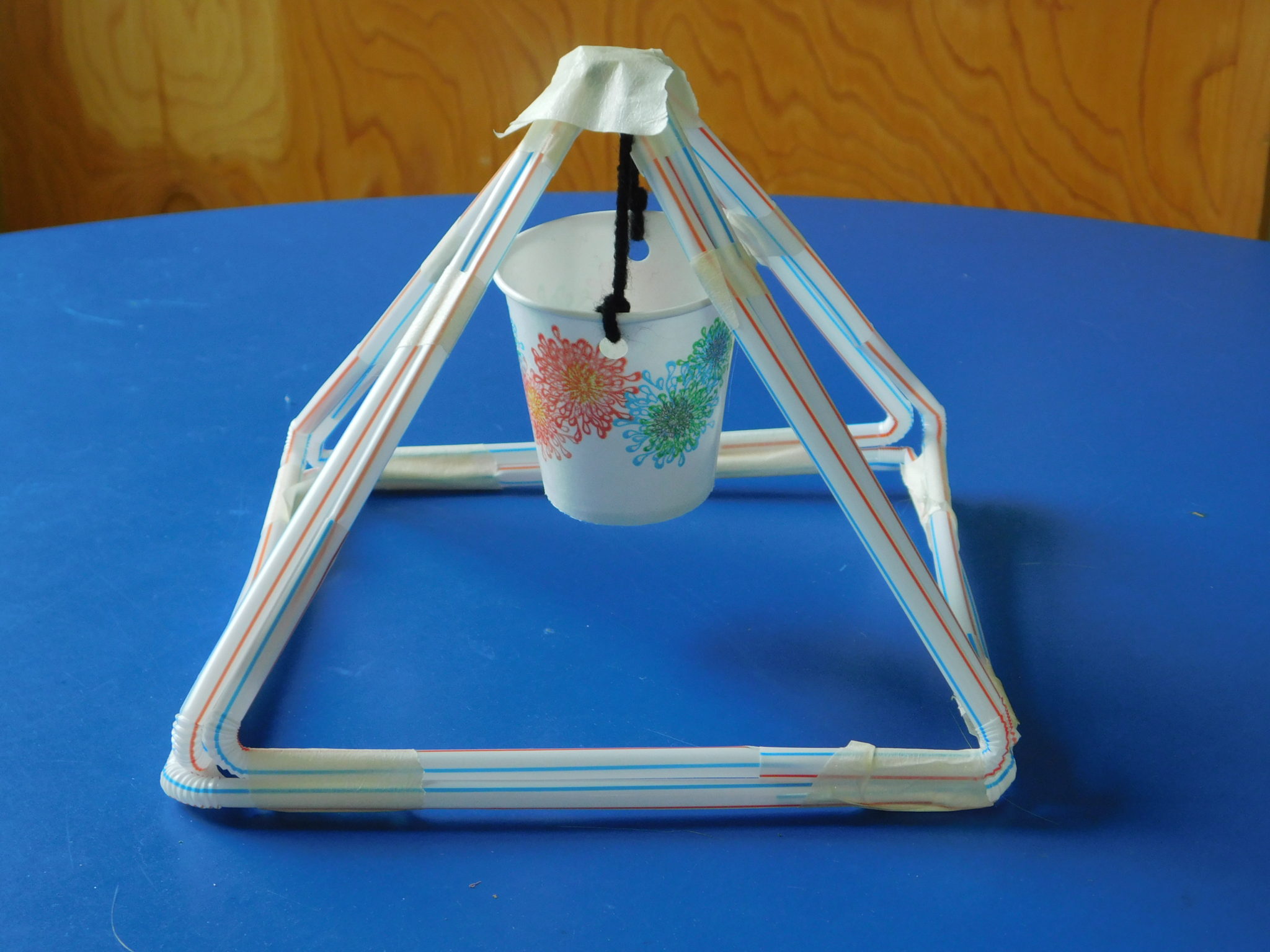

I love STEM activities. I’m always on the hunt for a new challenge to throw at my kids, hence this STEM tower challenge. What I love most about STEM is that it encourages kids to think, test, evaluate, and then try again.
Even better? Most STEM activities use simple household items. Kids start seeing everyday objects in new ways. A straw isn’t just a straw anymore—it’s a building tool.
A Last-Minute STEM Tower Challenge Save
This STEM tower challenge actually came about by accident. Our original science experiment was a total no-go. Somehow, we didn’t have the supplies to make a flashlight (which I swore we had).
So, off to Pinterest I went.
That’s when I found the Bucket Tower Challenge on the site Teachers Are Terrific. It looked fun, simple, and easy to adapt, perfect for a quick STEM challenge at home.
Setting Up the STEM Tower Challenge
To keep things fair (and prevent a massive tape monster), I gave each child the same limited materials. Then I explained the rules of the challenge.
The STEM Tower Challenge Rules
Each child or team must build a STEM tower where:
- The bucket does not touch the table
- The tower holds at least 10 pennies
- The winning tower holds the most weight without collapsing
I didn’t set a time limit. I wanted to see their ideas unfold without pressure, and that worked perfectly for my kids.
STEM Tower Challenge Materials
Here’s what we used for this STEM towers:
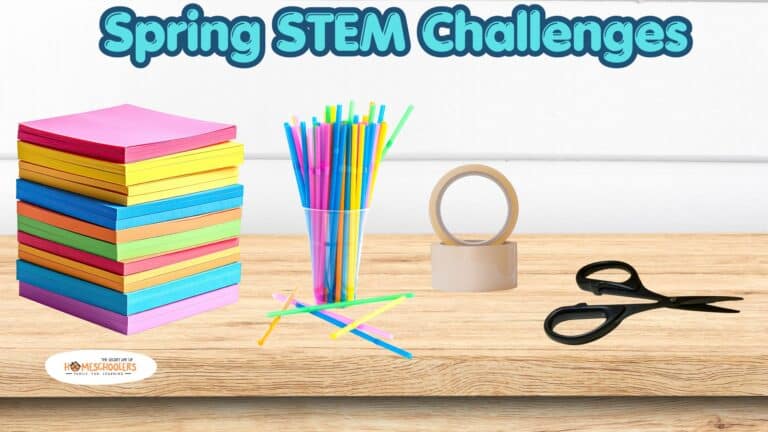
- 18 inches of masking tape
- 1 bathroom cup (paper or plastic)
- 12 inches of yarn or string
- 16 drinking straws
- Scissors (if needed)
Simple, inexpensive, and totally doable at home or in the classroom.
Building the STEM Towers
Each child got their own materials and jumped right in. Almost immediately, their approaches were completely different.
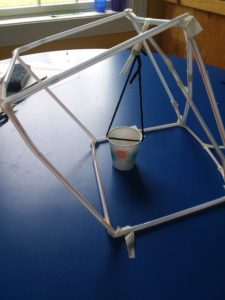
My son went big. Really big. His plan was to build the tallest STEM tower possible.
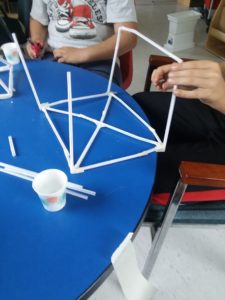
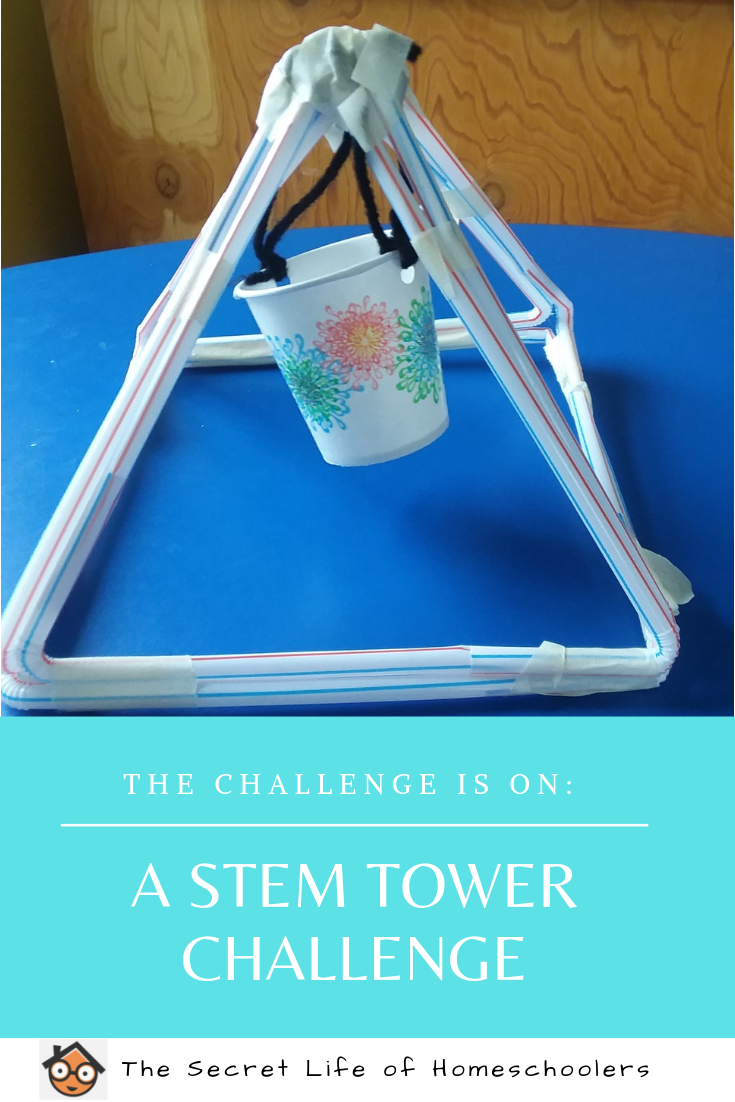
My daughter went smaller and sturdier. She chose a pyramid shape and worked carefully as she built.
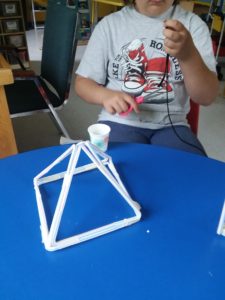
It didn’t take long to see which strategy might work best. Hint: bigger doesn’t always work better, to my son’s dismay.
Testing the STEM Tower Challenge
Once the towers were finished, it was time to test them with pennies.
My daughter’s pyramid-style tower was rock solid. It held 100 pennies without collapsing. The low, reinforced structure stayed stable the entire time.
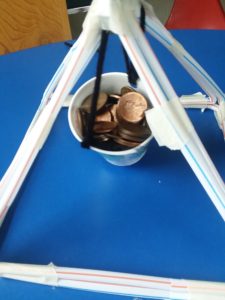
My son’s tower? It quickly became the leaning tower. Around the eighth penny, the bucket tipped and hit the table. He had a great idea, using yarn as a guidewire. But… he had already used all his tape. Still, it was smart thinking.
Not Quite Over: STEM Thinking in Action
We always treat a STEM challenge like real science.
- If it worked, why did it work?
- If it didn’t, what could we change?
My daughter remembered that pyramid shapes are strong, and this challenge proved her right. She also realized that taller structures tip more easily.
My son wasn’t ready to admit that bigger wasn’t better. After the challenge ended, I gave him a little extra tape to test his guidewire idea. His tower improved and held more pennies, though it was still unstable. He made it work, and that’s what mattered most.
{RELATED: Lego Balloon Cars, STEM Straw Activities, 14 STEM Activities with Popsicle Sticks, and Quick STEM Activities for Kids.}
Why the STEM Tower Challenge Works So Well
This STEM tower challenge was a hit. My kids immediately asked to do another one the next day.
You could easily repeat this activity and challenge kids to use a different design or swap out materials. The possibilities are endless.
But the real magic? The conversations afterward.
Kids learn so much by explaining their thinking and hearing how others approached the same STEM tower challenge differently. That’s why STEM activities are such powerful learning tools, at home or in the classroom.
Happy Homeschooling!


Thanks for sharing this activity. How old were your children at this time?
You’re welcome. I hope you find it helpful. My kids loved it. It was a good activity for my tweens.
What a fun idea! I am goi f to try it with my kids. Did you punch holes in the cups or let them figure out a way to get the string through?
I did not punch holes in the cups. I left it up to the kids to figure it out. I hope you have fun!