
This post contains affiliate links. By clicking on the link and making a purchase, I may receive a small compensation at no extra cost to you. I only promote products that we love and use in our homeschool. Please click here for full details on my Disclosure Policy.
Teaching writing can be intimidating. I know. I have always been intimidated by it, and I’ve been homeschooling for 11 years. That’s why I’ve been using Institute for Excellence in Writing (IEW) with my own kids for a long time. In fact, my son is now a senior, and we’ve been using IEW since Level A. So you’d think I’d have teaching writing to students completely figured out by now, right?
Well…sort of.
One thing I’ve always appreciated about IEW is that the program gives students a clear writing structure. But I’ve also learned that understanding the method myself makes a big difference in how well I can help my child. That’s where Teaching Writing: Structure and Style comes in.
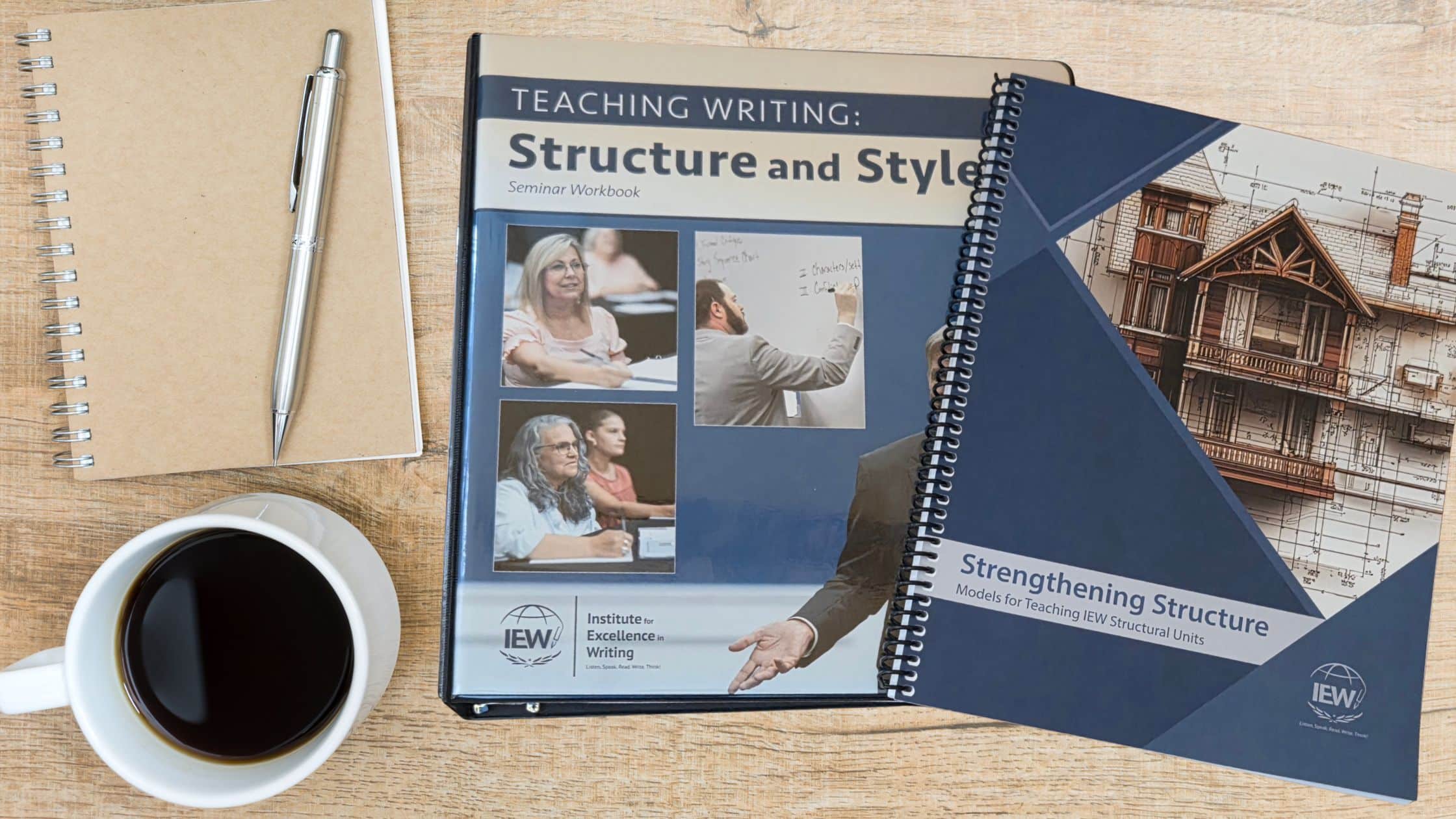
Teaching Writing: Structure and Style is IEW’s teacher training program. They’ve updated it, so I requested a copy to review. It walks parents and teachers through the Structure and Style method so they can confidently teach writing themselves. With the Premium Membership option, you also receive a year of additional resources, teaching tips, and other benefits.
I’ve used an earlier version of IEW’s teacher training many years ago, so I was interested to see how the program has changed. One of the biggest differences for me is how easy it is to access the training now. Instead of digging out DVDs, I can simply stream the lessons and go directly to the unit I need.
And after going through the updated training, I was reminded why I think understanding the IEW method is so useful for homeschooling parents. Because teaching writing doesn’t need to be difficult or scary if you have the right tools.
What Is Teaching Writing: Structure and Style?
Teaching Writing: Structure and Style is designed to teach you how to teach the IEW writing method.
This isn’t a student writing course. You don’t have to purchase the Structure and Style student program to use the teacher training. The seminar is designed so that a parent or teacher can learn the method and teach it on their own.
The training covers all nine units of the Structure and Style program, beginning with keyword outlines and gradually building students toward more complex, multi-paragraph writing.
The seminar is about 14 hours long, so it definitely requires a time commitment. But you don’t have to sit down and watch 14 hours of videos before you can begin teaching. You do need to watch Units 1 and 2 right away because you need them for the other units.
If you’re short on time, though, you could watch the first few units and then stay a few units ahead of what you’re currently teaching. That would make it much more manageable.
However, if you like to plan your whole year and have a clear map, spend some time over the summer watching all the training.
And if you complete the written exercises with the teachers in the seminar and submit them to IEW, you can also become accredited to teach the IEW method.
Learning How to Teach Writing by Actually Doing It
One of my favorite things about the seminar is that Andrew Pudewa doesn’t simply stand in front of a camera and explain how the program works.
The seminar is filmed with real teachers who are learning the method.

They participate in the exercises and practice the concepts along with him. They ask questions, work through the material, and experience the teaching process themselves.
I really like this.
When you’re learning how to teach something new, there are usually questions that come up along the way. Having other teachers in the room who are also learning means you get to hear some of those questions and see how the instructor responds.

It also lets you see the process rather than just hear an explanation of it.
Andrew Pudewa teaches the concepts in the same way he teaches students, so you get to experience what the process looks like from a student’s perspective.
For me, that made the training much more useful than simply reading a teacher’s manual and trying to figure out what I was supposed to do. That doesn’t work for me.
The Nine Units of Structure and Style
The training walks you through the nine units of the Structure and Style method, starting with the very basics and gradually building students’ writing skills.
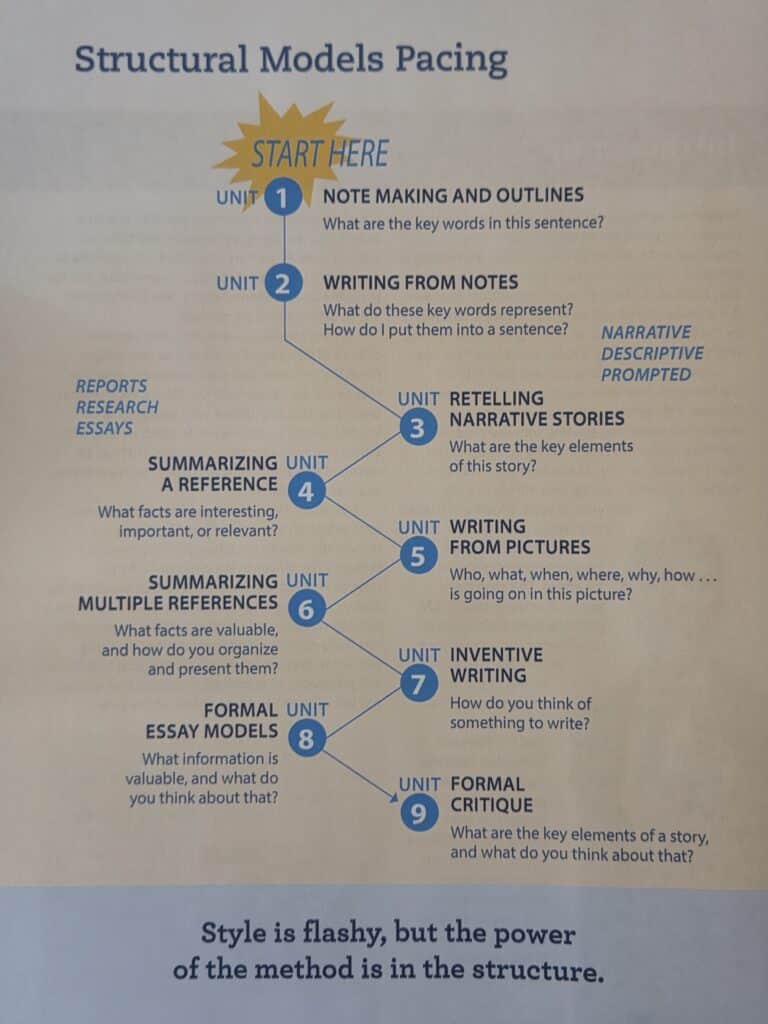
One thing I found particularly interesting was how the program alternates between different types of writing. I hadn’t noticed this detail until the training mentioned it.
Some units lean more toward creative writing, while others are more technical or nonfiction. I can see why that can help students.
Some kids enjoy creative writing; my daughter is one of them. Others would much rather be given information and told exactly what they need to write about (my son). By alternating writing types, students get opportunities to work in the style they prefer while still developing skills in styles they may not enjoy as much.
And they’re only spending about a month at a time on the type of writing they don’t prefer before getting back to something different.
I think that can be particularly helpful for reluctant writers.
A Structured Approach to Teaching Writing to Students
This is probably one of the biggest reasons I like the IEW method. Writing can feel overwhelming to a student who doesn’t know where to begin.
What am I supposed to write about?
How long does it need to be?
How do I organize all these ideas?
What does a good paragraph look like?
IEW provides students with a structure and a process to follow.
My son has always been a reluctant writer. For him, the biggest problem wasn’t necessarily that he had nothing to say. It was organizing his thoughts and figuring out how to put everything together.
Having a clear structure takes away much of the guesswork.
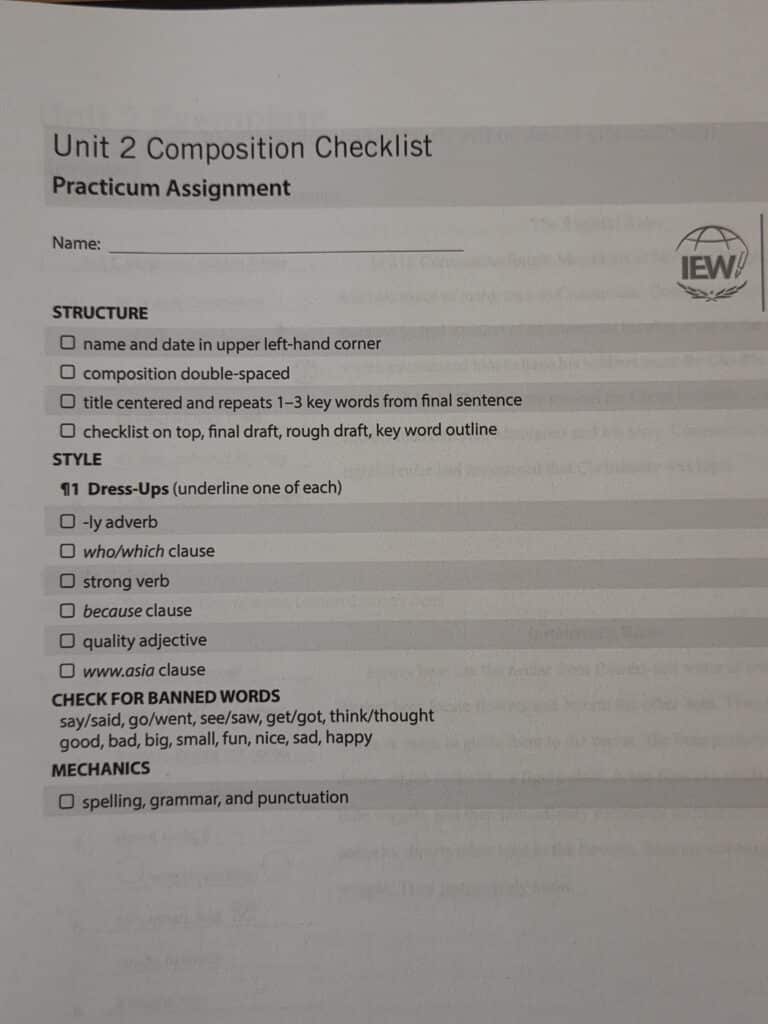
Students know what they’re supposed to do, what the finished product should look like, and what to look for as they work through the assignment. The checklist for each assignment reinforces those expectations.
Plus, the teacher can also adjust the level of the source material.
For a reluctant writer, you could choose a short, high-interest passage rather than expecting the student to work from a lengthy or complicated source.
The seminar also explains how to adjust instruction depending on the student’s ability level. So, this method doesn’t only work for students who are already confident writers. You can adapt the teaching for a reluctant writer or a strong writer.
The Structure and Style Seminar Workbook
The seminar comes with the Structure and Style Seminar Workbook, which I would definitely keep nearby while teaching.
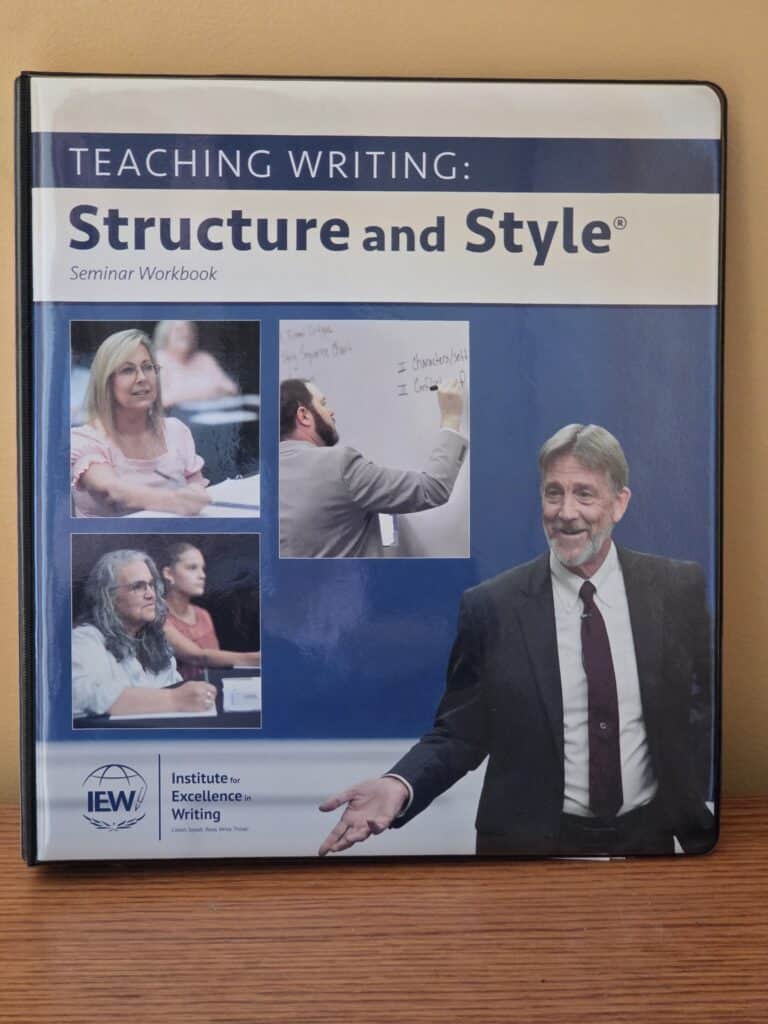
The workbook follows the nine units and gives you a quick reference for each one, including:
- An overview of what students will learn
- Goals
- Recommended resources
- Teaching procedures
- Models and examples
- Reference charts for the writing structures
The workbook also includes model charts you can copy or enlarge for posters or student reminders.
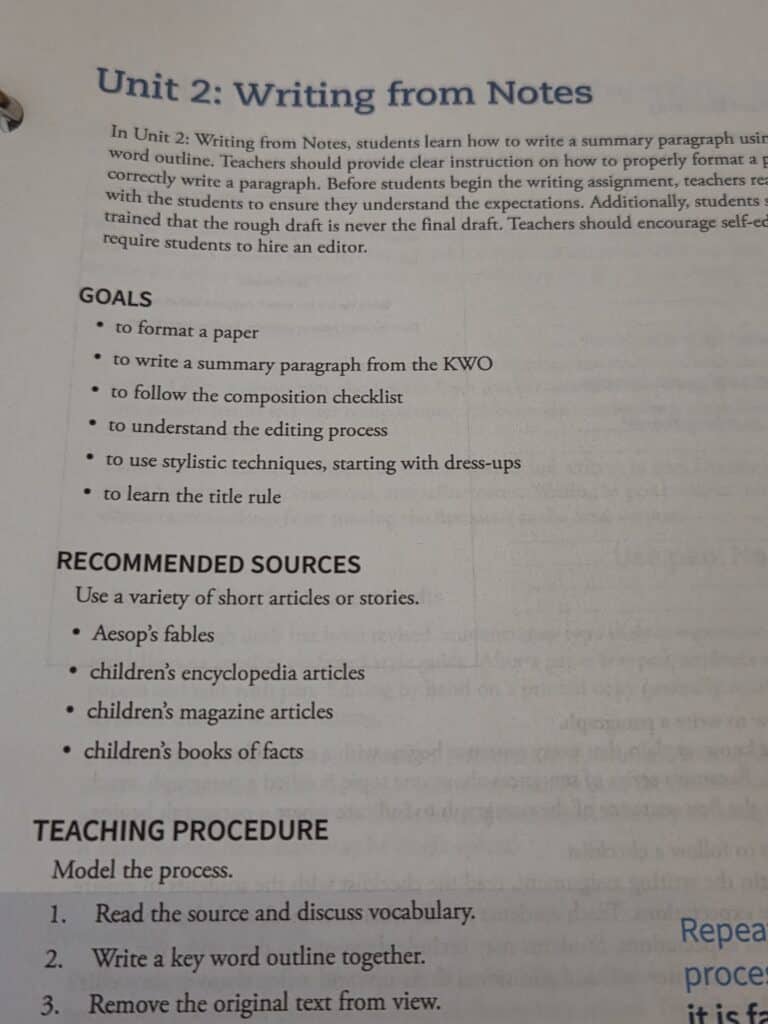
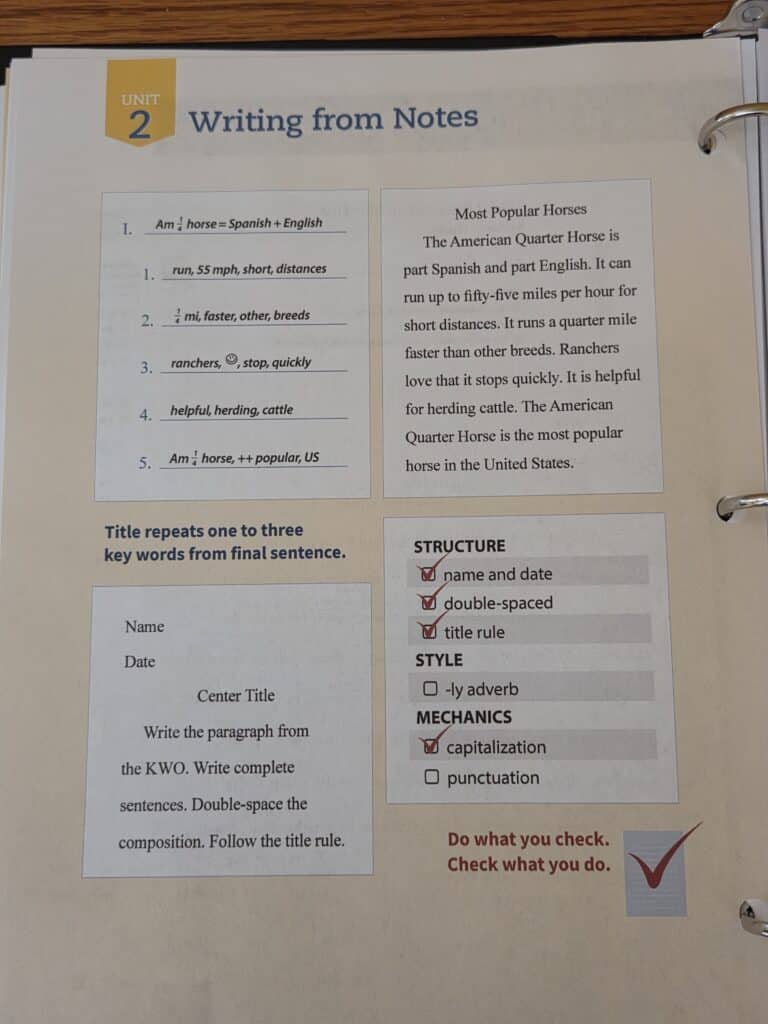
I like that the workbook works together with the videos. You watch the lesson and follow along in your workbook. Plus, it is available as a quick reference when you actually go to teach. You don’t have to rewatch a video every time you need a reminder about how a particular unit works.
Strengthening Structure: Models for Teaching IEW Structure Units
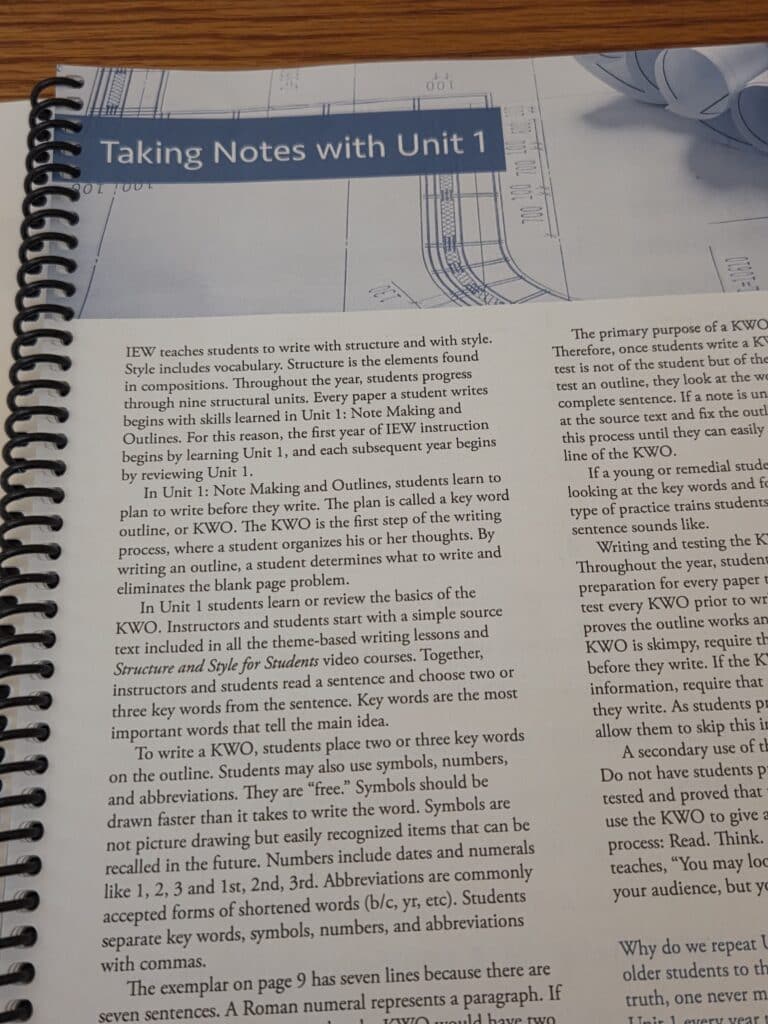
I also received Strengthening Structure: Models for Teaching IEW Structure Units, which is another really useful reference.
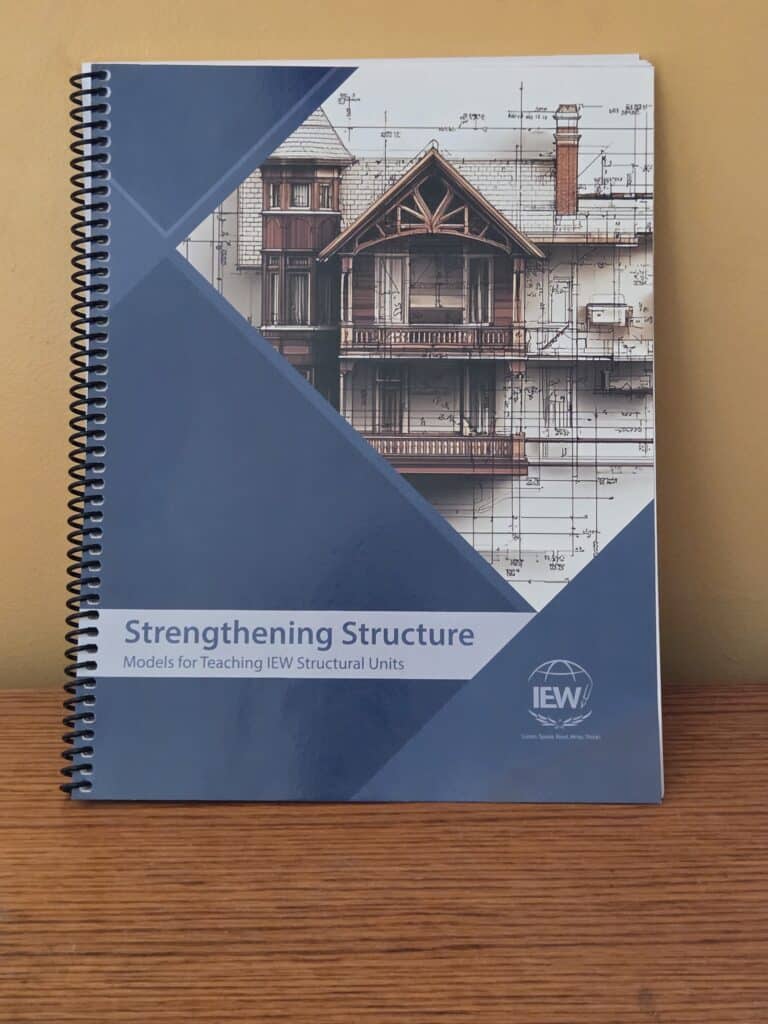
This book gives an overview of the units and then goes more in depth on how each one is taught.
The first page of each unit explains the teaching in detail and provides the model page used as a reference for teachers and students.
Then it gives examples for each level of the Structure and Style program. For example, when looking at Unit 2, Writing from Notes, you can see how to set up the board, the story used for the lesson, and the keyword outline for Levels A, B, and C.
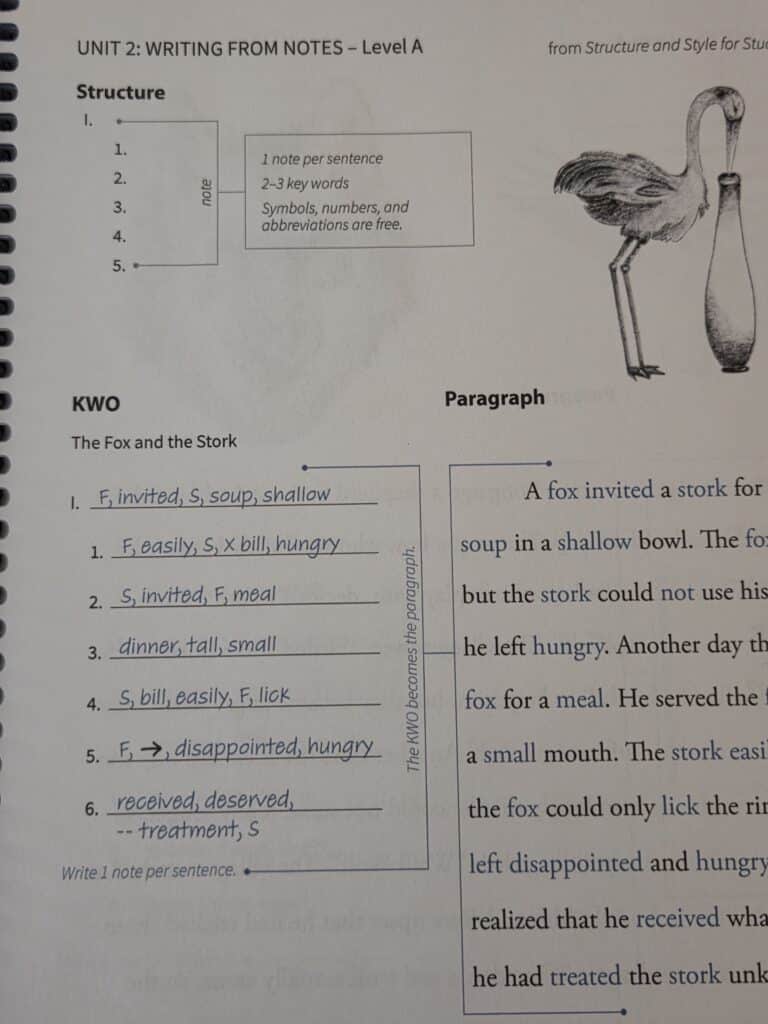
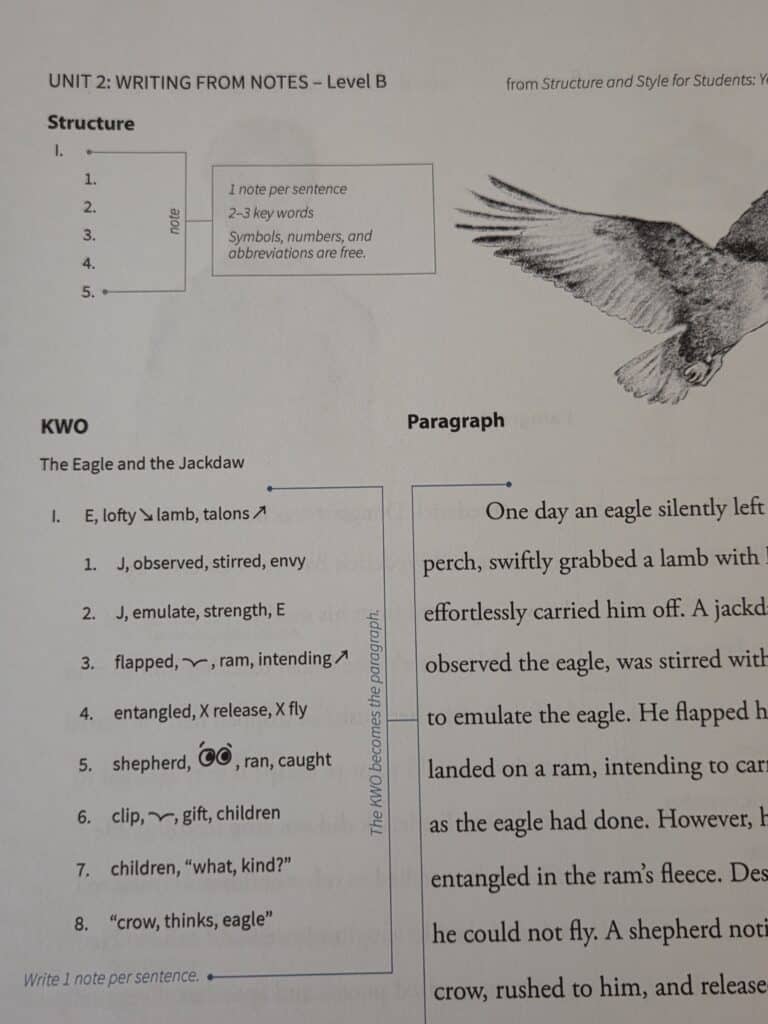
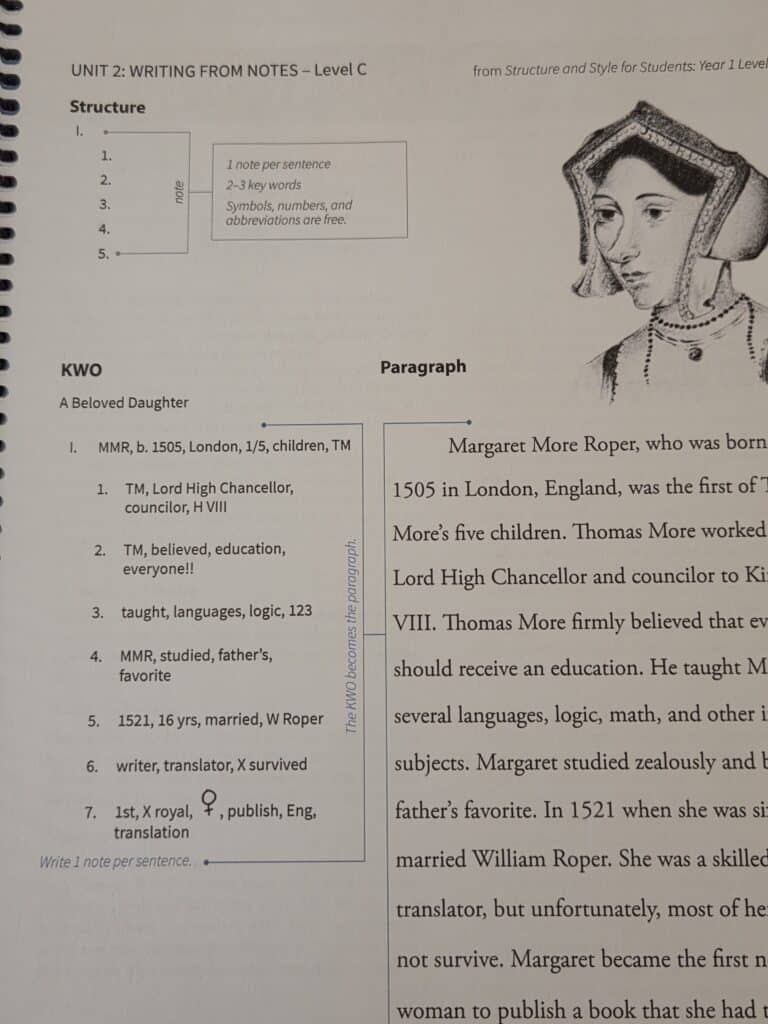
The format looks very similar to the board notes you’ll find in the other IEW teacher materials.
I really like how straightforward this book is. It gives you a way to quickly see how to adjust the same unit for different levels, rather than having to figure that out yourself.
I can definitely see myself referencing this book before teaching a unit.
Do You Need the Student Structure and Style Program?
One thing I want to make clear is that you don’t have to purchase the Structure and Style student program in order to use Teaching Structure and Style.
You can learn the method through the seminar and teach it yourself. So, if you just want to learn how to teach writing to students, you can do just that. It’s a clear, easy-to-use teaching method.
However, if you already own the student Structure and Style program, I still think the teacher training is valuable. Really.
Andrew Pudewa’s student videos are excellent. In fact, that’s one reason it can be easy to think, “Why do I need the teacher training? Mr. Pudewa is already teaching my child!”
But I found that I understood what my son was doing much better after going through the teacher training myself. I don’t like feeling unable to help my children because I don’t understand what they’re doing.
Even if your child is doing well with the student program, understanding the method yourself means you can:
- Better assess your child’s writing
- Recognize where they may be struggling
- Explain a concept in another way
- Provide additional practice
- Adjust an assignment when necessary
- Reinforce the writing techniques throughout other subjects
That last one matters most to me.
Using IEW Across Your Homeschool
Once you understand the Structure and Style method, you’re not limited to using it only during your formal writing lessons.
IEW offers several content-based writing programs, including history, Bible, and other subject-based writing materials. These are especially useful because they combine writing with something students are already learning.
Instead of teaching writing in isolation, students can use history, science, Bible, literature, or another subject as the content for their writing. That makes writing more meaningful and relevant.
It also means the writing skills don’t disappear as soon as the writing lesson is over. Students can use the same structure and techniques in other assignments. If you know how to teach the writing program, you can carry it over into your other assignments.
I really like the idea of creating consistency this way. If my child is writing a history paper, he can use the same writing method he’s been practicing during his writing lessons. And believe me, he has a lot of history and literature critique papers to write his senior year.
The new Structure and Style books for Levels A, B, and C make this even easier because they tell you which Teaching Structure and Style video to watch for the unit you’re teaching.
So, you’re not left trying to figure out which portion of a 14-hour seminar applies to the lesson in front of you.
Premium Membership
Teaching Writing: Structure and Style also comes with a one-year Premium Membership.
You can renew the membership each year for under $40, and you can cancel it if you decide you don’t want to renew.

The membership includes:
- Discounts
- Freebies
- Audio files with additional teaching tips
- Teaching-tip videos across the Structure and Style levels
- Downloadable materials for home or classroom use
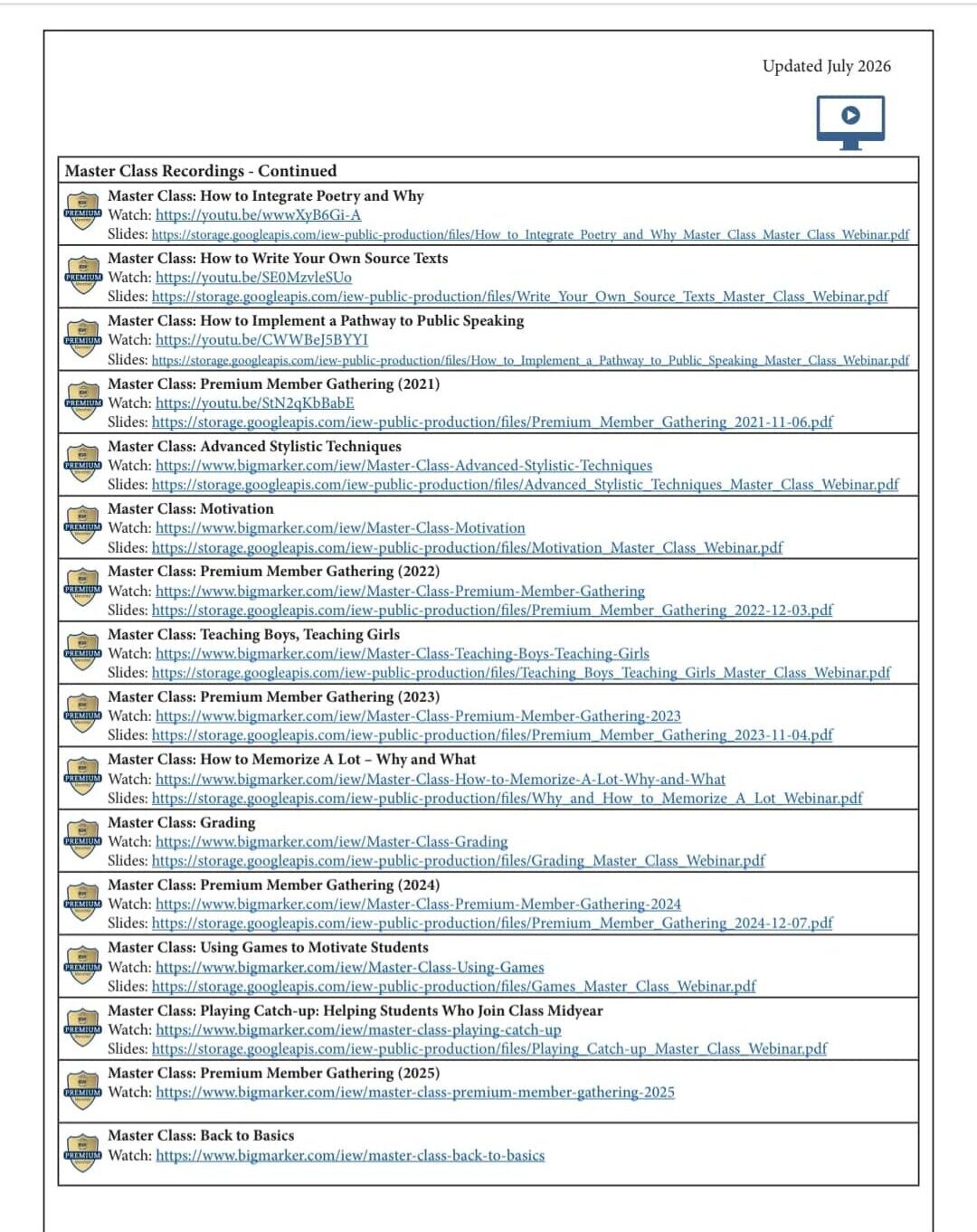
- Archived classes taught by Andrew Pudewa
- The IEW Checklist Generator
There are a lot of archived classes, so this isn’t something you’ll run out of quickly.
The Checklist Generator
The Checklist Generator is probably my favorite part of the Premium Membership. It contains checklists for the various IEW writing programs (every program), and you can edit them to fit your students’ needs.
I’ve actually found this useful in our homeschool.
We’ve used IEW since Level A, and because my son has been doing it for so many years, he understands the stylistic techniques. At this point, he gets frustrated if I require him to use something like a who/which clause in every single paragraph just because it appeared on the checklist. So, I started modifying his assignments. Instead of requiring a particular stylistic technique throughout the entire assignment, I might have him use it in one paragraph.
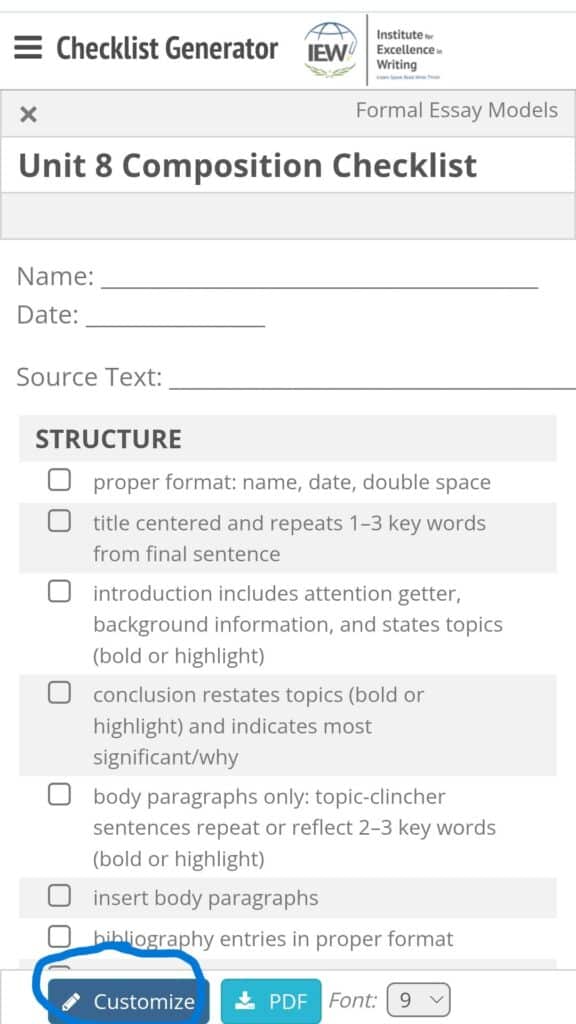
The Checklist Generator makes this kind of customization much easier. I can choose what I want included, edit the checklist, save it, and print it without spending a bunch of time creating and formatting my own checklist.
Honestly, I could see myself renewing the Premium Membership just for this feature.
My Thoughts After Using IEW for Years
I’ve been around IEW long enough to have used an earlier version of the teacher training many years ago. I’ve watched my own son progress through the program from Level A to Level C. So, I don’t look at Teaching Writing: Structure and Style as someone completely new to IEW.
And honestly, that may be why I appreciated it as much as I did.
The student instruction videos are excellent. But I wouldn’t have felt nearly as confident helping my son over the years if I hadn’t understood what he was actually being taught.
Writing intimidated me before I understood the method.
Once I understood the structure, teaching became much easier.
And for a reluctant writer, I think that structure can be incredibly valuable. Instead of staring at a blank page and wondering how to begin, students have a process to follow. They know what is expected, and they have a checklist to help them.
I also appreciate that the skills aren’t confined to one writing course. Once you understand the Structure and Style method, you can use those skills in history, science, Bible, literature, and other writing assignments.
That consistency is valuable.
Your child doesn’t have to learn one way to write in writing class and then suddenly be expected to figure out a completely different way to write a history paper.
Is Teaching Structure and Style Worth It?
If you want to learn how to teach the IEW writing method yourself, I think Teaching Writing: Structure and Style is absolutely worth considering.
The 14-hour seminar is a commitment, but it is worth it.
I especially like that the training lets you see the method being taught and practice it yourself, rather than simply reading about it.
And if you already own IEW’s student programs, I still think there is value in learning the method yourself.
You may never need to step in and reteach a lesson. But when your child gets stuck, wants more practice, needs an assignment adjusted, or moves into one of IEW’s content-based writing programs, you’ll have a much better understanding of what to do.
For me, that’s the biggest benefit.
I don’t want to simply know that my child is following an IEW writing program. I want to understand how and why it works so I can actually help him.
Happy Homeschooling!