

This post contains affiliate links. By clicking on the link and making a purchase, I may receive a small compensation at no extra cost to you. I only promote products that we love and use in our homeschool. Please click here for full details on my Disclosure Policy.
When I was growing up, cursive writing was simply something you did. Teachers expected papers to be written in cursive or typed on a typewriter. Later, computers became more common, and college professors required assignments to be typed.
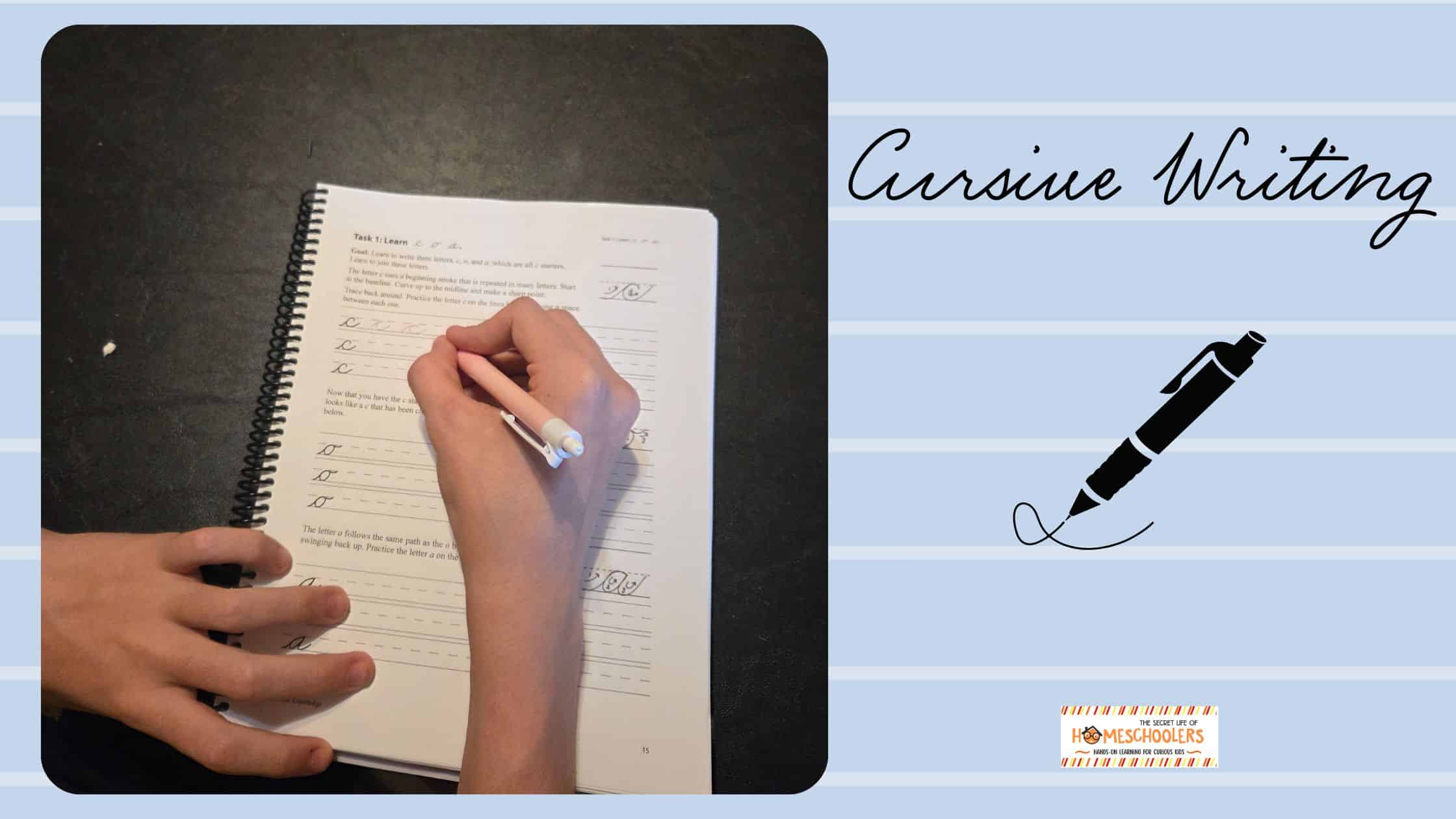
Today, typing on a keyboard is the norm for many kids. Even so, I still believe cursive is an important skill to learn. That’s why I decided to do this IEW Cursive Knowledge review and see how well this cursive writing curriculum worked with my son.
My son learned cursive during his elementary years, but he definitely needed a refresher. I didn’t like seeing him slowly and painstakingly sign his name whenever he needed to fill out a form. It was obvious he needed more practice, and I suspected many homeschool families were in the same situation.
Disclosure: As an IEW Brand Ambassador, I receive products to review. All opinions are my own.
What Is Cursive Knowledge?
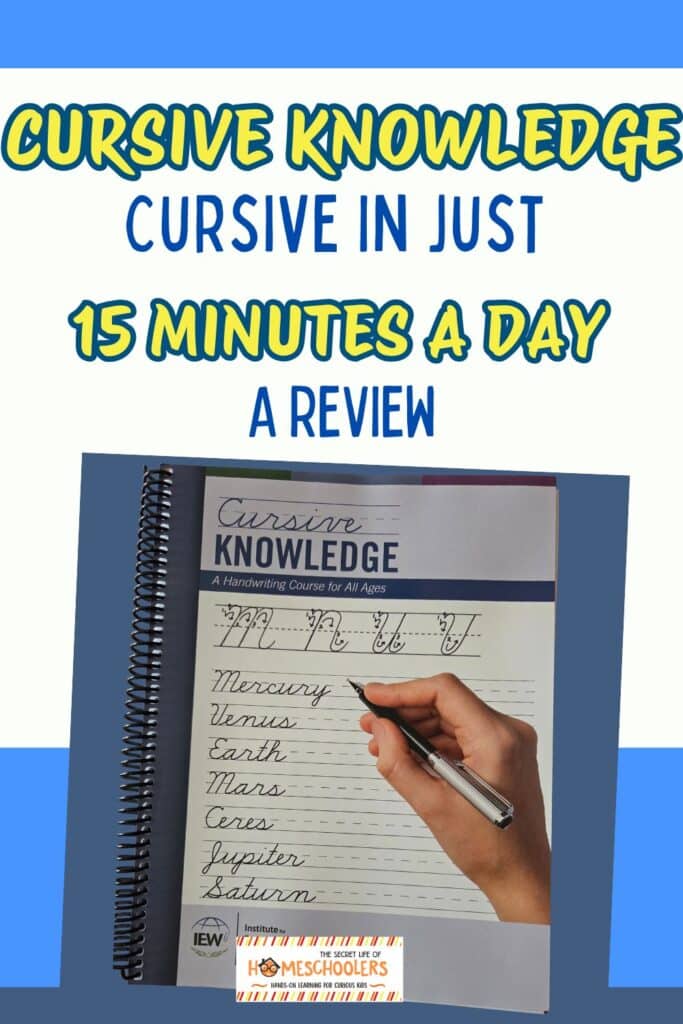
Cursive Knowledge: A Handwriting Course for All Ages is a simple, no-frills cursive writing curriculum designed for students of all ages.
When you purchase the program, you receive one spiral-bound student book along with three digital downloads:
- On Writing audio download
- Pen and Paper audio download
- Cursive Knowledge Reproducible Practice Sheet e-book
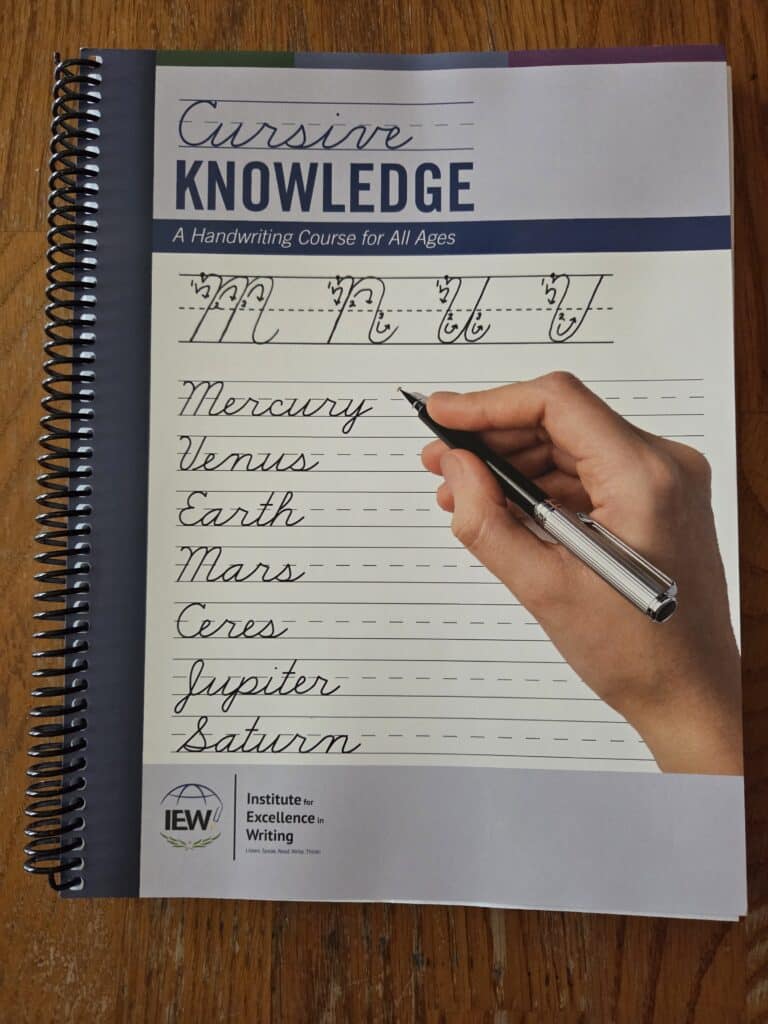
That’s it. There are no teacher manuals, DVDs, or complicated components to sort through.
The audio downloads are optional, but I found them worth listening to. Andrew Pudewa shares research and insights about handwriting and writing instruction. Each recording is between one and one-and-a-half hours long, but he is an engaging speaker who makes the information easy to follow. My kids and I have always enjoyed Mr. Pudewa, and I honestly didn’t notice the time.
The reproducible practice sheets are especially helpful. While you may already have handwriting paper at home, you may not have paper with dotted midlines that help students form letters correctly.
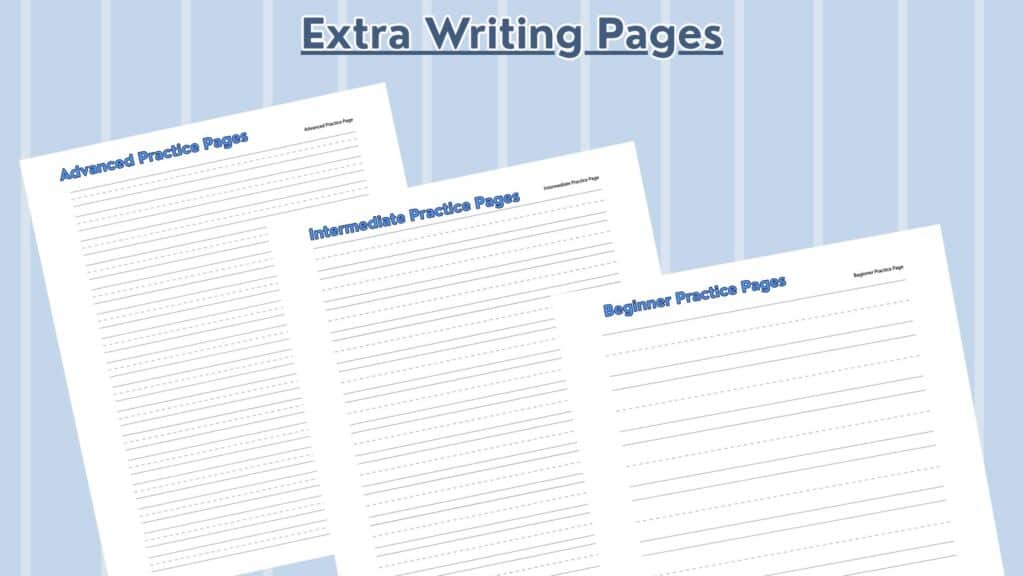
The printable sheets come in beginner, intermediate, and advanced formats. Younger children can use larger writing spaces, while older students and adults can practice on more traditional handwriting lines.
Getting Started with Cursive Writing
Teaching cursive isn’t complicated, and neither is this program.
According to IEW, students learn cursive through:
- Lots of practice
- A specific stroke order
- About 15 minutes of practice each day
The program emphasizes one simple principle: practice makes permanent.
My son would grab his student book, complete one task, and move on with his day. Lessons were short enough that they never felt overwhelming.
Daily Tasks
Each lesson is called a task. They are very simple to follow. Each task introduces two or three new letters that share similar formation patterns.
Students are shown exactly how to form each letter with numbered stroke guides and examples. They then practice each letter on three handwriting lines.
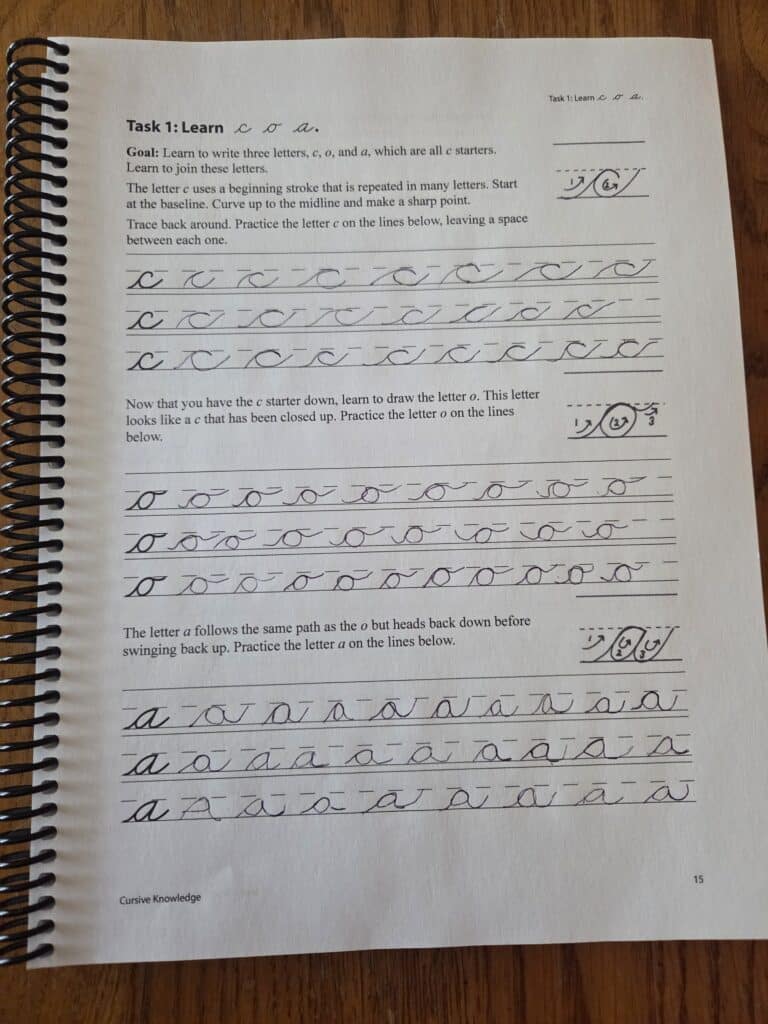
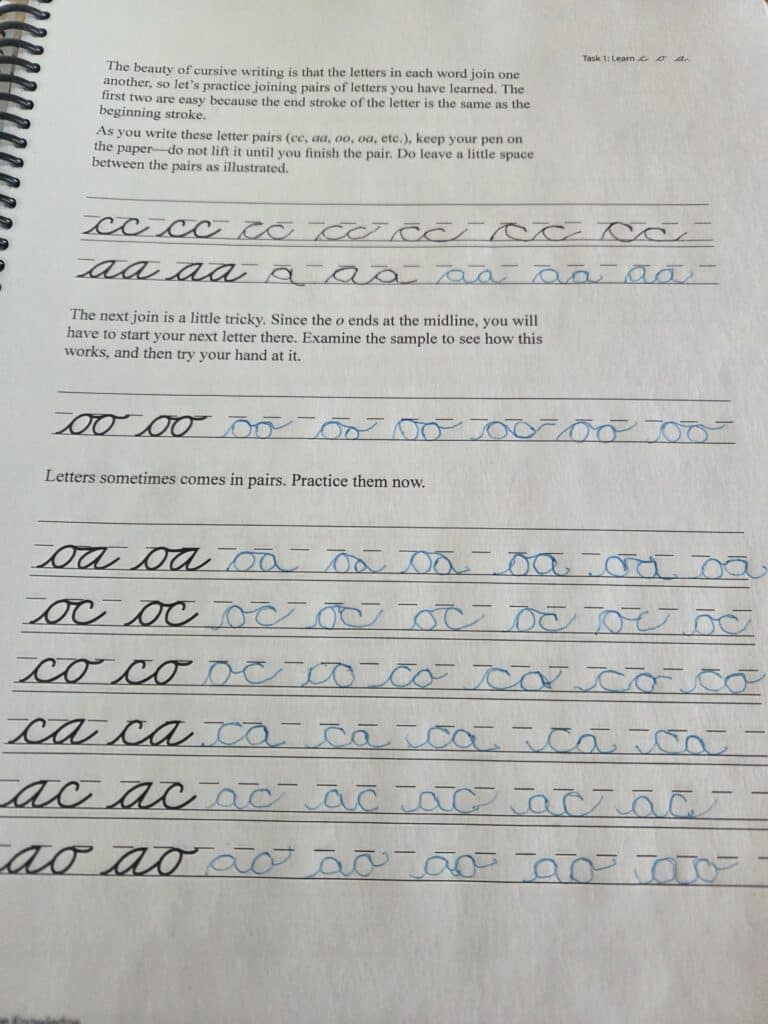
After learning the individual letters, students begin connecting them. They first join identical letters, such as two Cs, and then practice connecting different letters.
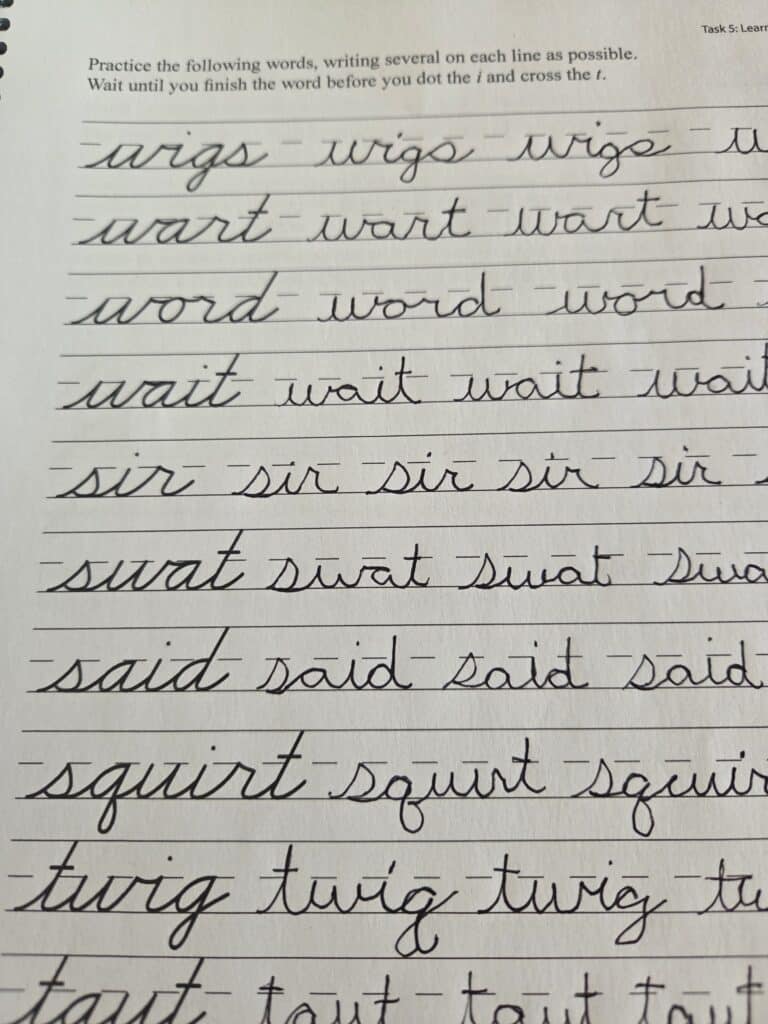
As students progress through the course, they begin writing short words using the letters they have already learned. This gradual approach helps build confidence while reinforcing previous lessons.
Helpful Tips for Successful Cursive Writing
The introduction includes several practical handwriting tips, including:
- Proper posture
- Correct pen grip
- Using a pen rather than a pencil
I found the section on paper positioning particularly interesting.
The book explains how right-handed students should position their paper and includes helpful suggestions for left-handed writers who often struggle with smudging ink while writing.
These small details can make a big difference when learning cursive.
How Long Does Cursive Knowledge Take?
Let’s be honest. Most homeschool moms want to know exactly how much time a curriculum requires. We are busy and usually have multiple kids.
If your child practices for about 15 minutes a day, five days a week, this cursive writing curriculum can be completed in roughly one month.
Instead of teaching one letter at a time, the program groups letters according to how they are formed. Students work through 24 tasks that focus on letter families, such as:
- C starters
- Loop starters
- Curvy-top starters
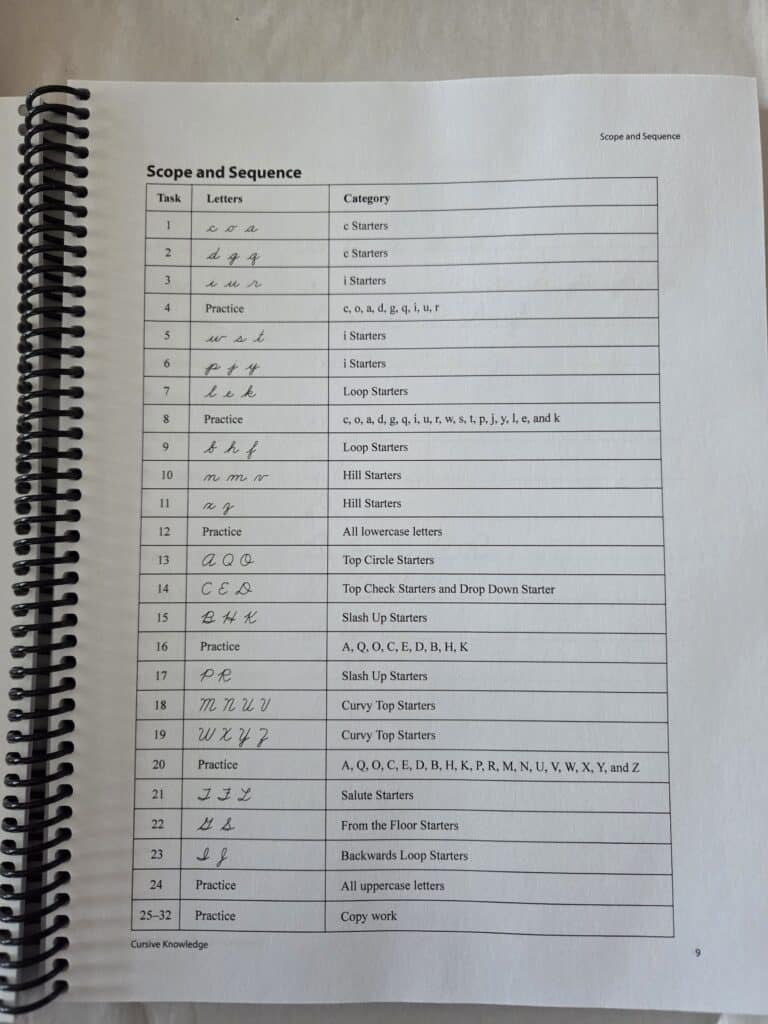
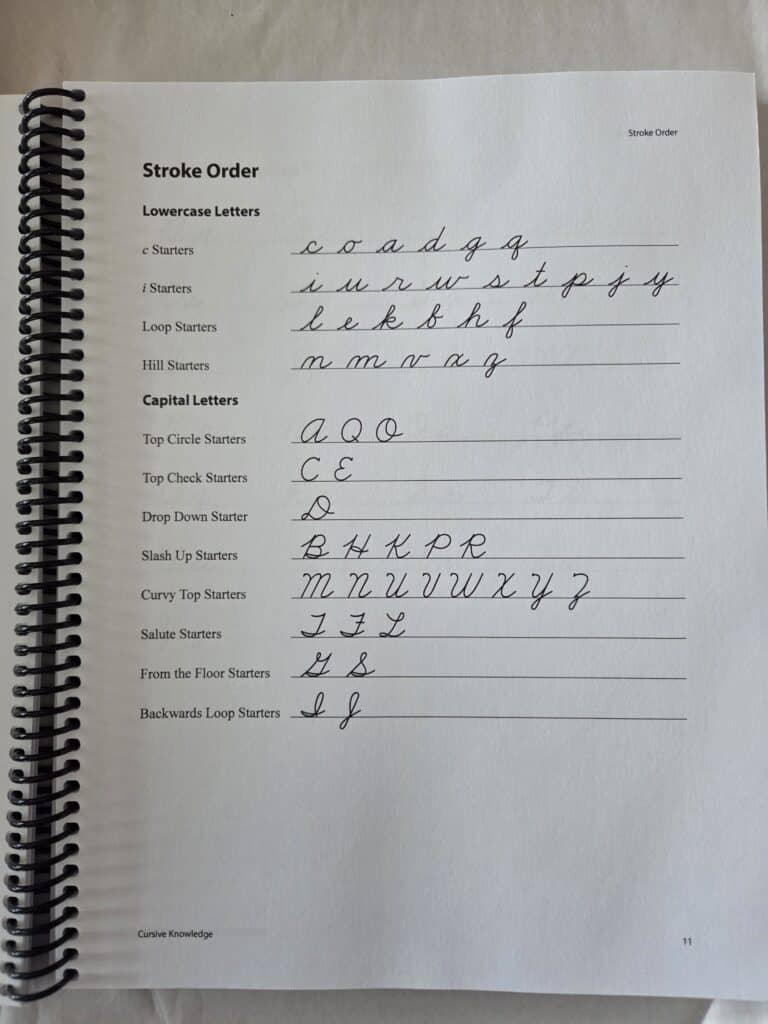
This approach helps students recognize patterns and learn more efficiently. Rather than practicing one letter at a time for weeks, students quickly begin to connect letters and write words.
By the end of the book (Tasks 25-32), students are copying sentences. They can even choose passages from their favorite books for additional practice.
Is It a Good Fit?
I think this program is a great fit for students who:
- Never learned cursive and need to start from the beginning
- Learned cursive years ago and need a refresher (like my teenager)
- Want a straightforward cursive writing curriculum without a lot of extras
- Need short lessons that fit easily into a busy homeschool schedule
One thing I like is that the book doesn’t feel babyish. Older students can use it without feeling like they’re working through an elementary workbook.
Things to Consider
While I like this program, there are a few things parents should know.
Each task covers two or three letters across two pages. At first glance, it may seem like students aren’t getting enough practice.
However, the program is designed to build on previously learned letters continually. Students quickly move from practicing individual letters to writing connected letters, words, and eventually sentences.
Will that be enough practice for every child?
That depends on your student. The pacing works for my son, and I’m noticing improvements in his penmanship.
Fortunately, the downloadable practice sheets provide additional handwriting paper if your kiddo needs more repetition before moving on.
Why Learn Cursive Writing?
One question many parents ask is whether cursive is still worth teaching in today’s digital world.
The author addresses this right away. Research suggests that cursive writing engages multiple areas of the brain at the same time.
Because cursive uses continuous movement, students develop hand-eye coordination while strengthening fine motor skills. They also learn to think ahead as letters connect in a flowing pattern.
Plus, if you have a child who struggles with dyslexia, cursive can often help.
There is also a practical reason to learn cursive: reading historical documents.
Several years ago, I visited our state’s archives on a field trip. The docent explained that they are always looking for volunteers who can help “translate” old handwritten documents because fewer people today can read cursive.
I’ve seen this in my own family as well. My daughter recently told me she sometimes writes in cursive during college classes (when she wants it private) because many of her classmates can’t read it.
In a world of keyboards and touchscreens, cursive remains a useful and valuable skill. It’s too bad so many people don’t understand that.
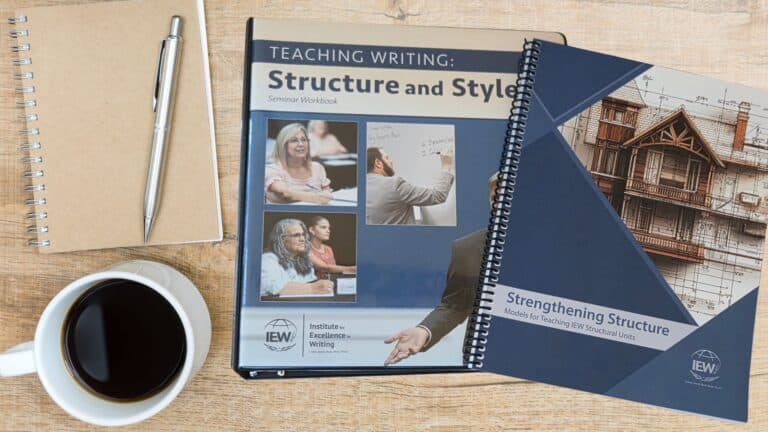
While handwriting and composition are different skills, both are important. Once students can write comfortably and confidently by hand, they can focus more on communicating their ideas. If you’re looking for help with the composition side of writing, you may also enjoy my review of IEW’s Structure and Style writing curriculum.
Pros and Cons of IEW Cursive Knowledge
Pros
- Short lessons take only about 15 minutes a day.
- Suitable for a wide range of ages, from elementary students to adults.
- Group letters by formation to make learning easier.
- Includes reproducible practice sheets for extra handwriting practice.
- Doesn’t feel babyish, making it a good fit for older students and teens.
- Easy to use with little parent preparation.
Cons
- Students who need a lot of repetition may need to print additional practice pages.
- There is very little direct instruction beyond the examples in the workbook.
- Some children may prefer a slower pace with more practice on each letter before moving on.
Best For: Homeschool families looking for a simple, affordable cursive writing curriculum that can be completed in about a month and works well for older students who need a refresher.
Who I Think This Cursive Writing Program Is Best For
- Late elementary students learning cursive for the first time (Grades 3 or 4+)
- Middle school students who never mastered cursive
- Teens who need a refresher before college or employment
- Adults who want to improve their handwriting
Final Thoughts on This IEW Cursive Knowledge Review
Overall, I found IEW’s Cursive Knowledge to be an easy-to-use cursive writing curriculum that helps students of all ages improve their handwriting.
Because lessons only take about 15 minutes, it’s easy to fit into a busy homeschool day.
This program works especially well for:
- Morning work
- While your kiddo waits for you to finish working with a sibling
- Waiting rooms
- A quick activity after lunch
- Any time you need a short, productive activity
I used Cursive Knowledge with my teenage son, and I’ve already noticed his writing becoming more fluid and natural.
What I like most is that the program is straightforward. There are no complicated lesson plans or unnecessary extras. Students simply practice a little each day and gradually improve.
If you’re looking for a cursive writing curriculum for younger students or a cursive refresher for older kids and teens, I think Cursive Knowledge from IEW is definitely worth considering.
Happy Homeschooling!


Great review! I felt the need to revisit cursive writing with my own son in high school as well.
IEW products are so well done!
Thanks, Jenn. I love IEW. They make teaching so much easier on parents, even something like cursive.