
If you’re anything like me, you’ve probably spent hours scrolling Pinterest looking for fun homeschool activities. Those subscription boxes and activity kits look amazing, but they’re not always realistic for the average homeschool budget. The truth is some of the best homeschool learning doesn’t come from expensive kits. It comes from ordinary supplies and a little imagination.
The good news? Some of our favorite homeschool memories didn’t come from expensive kits. They started with a cardboard box, painter’s tape, or a handful of craft sticks.
I’ve been homeschooling for over 10 years (and taught in schools for another 10), and when I think back on our homeschool journey, I don’t remember the worksheets.
I remember the:
- Lego boats that finally floated.
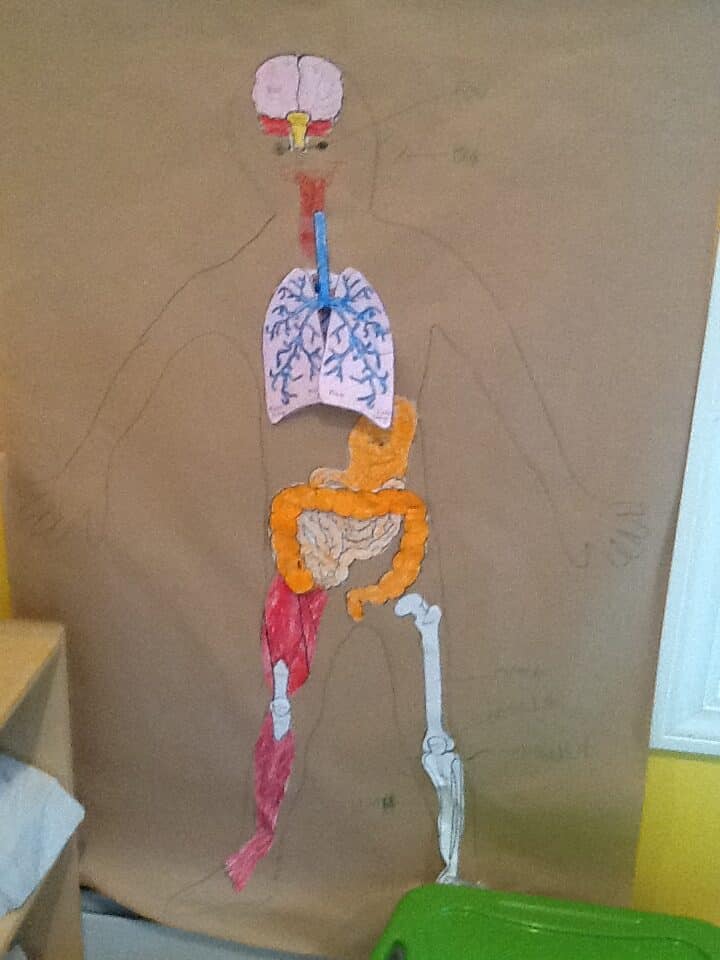
- Life-sized human body cutout with all the organs for each kid.
- Cardboard box chariot races.
- Messy, often failed, science experiments.
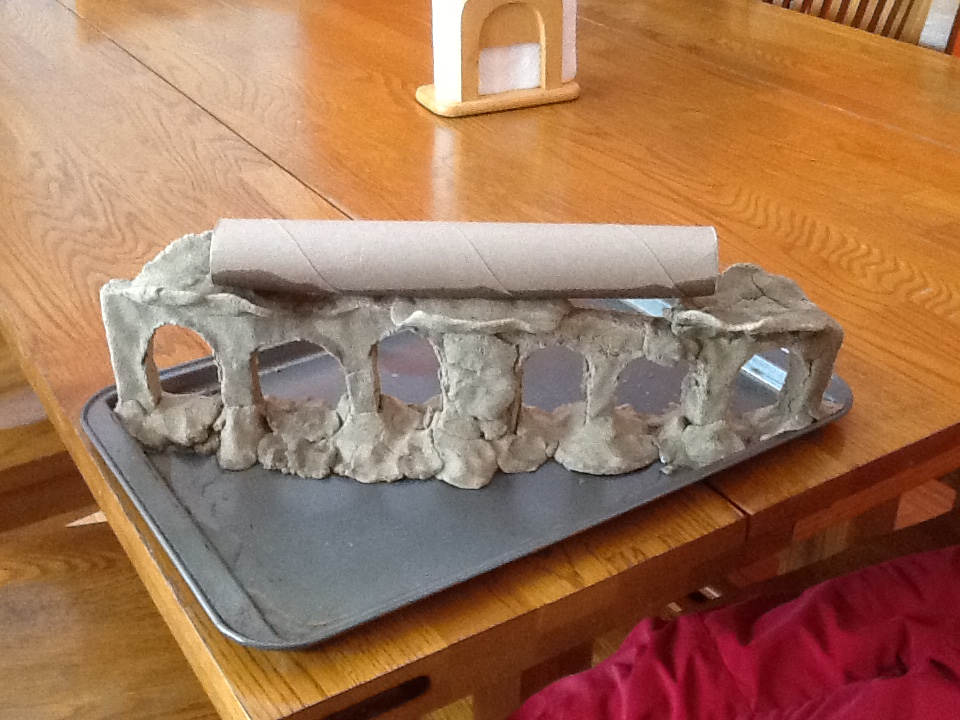
- Roman aqueduct model.
Those are the moments that stuck with my kids and with me.
I’m not saying worksheets don’t have their place. They certainly do. I know I can’t find some magically engaging math activities for every lesson.
However, think back to your homeschool. What is one fun memory that pops in your head and makes you smile? You know, the thing that you and the kids are still talking about.
That’s what I’m talking about. Building fun homeschool activities into your schedule, and not every day or week, but activities that will be a great way to learn AND make memories.
You don’t need expensive supplies to create meaningful homeschool memories. Sometimes all it takes is a little curiosity and a few everyday items already sitting in your house.
Homeschool Activities That Are Low-Prep and Fun
We all want those homeschool moments where everyone is laughing instead of arguing, asking questions instead of complaining, and learning without anyone realizing how much they’re learning.
So I put together this list to show that fancy, expensive subscriptions don’t have to be the only way to add memorable learning activities.
Cardboard Box Homeschool Activities
I’m sure you have read the book Not a Box by Antoinette Portis at some point (or seen it). The book highlights all the things a cardboard box can mean to a child. Well, you can also use boxes of various sizes for homeschool activities that sneak in learning.
Why I love it: They encourage creativity, problem-solving, and imaginative play with almost no preparation.
Marble Maze– With this activity, kids will plan, measure, and use some engineering skills. This works best with a box lid or a shallow one. Then you just need straws or something similar to make the path walls.
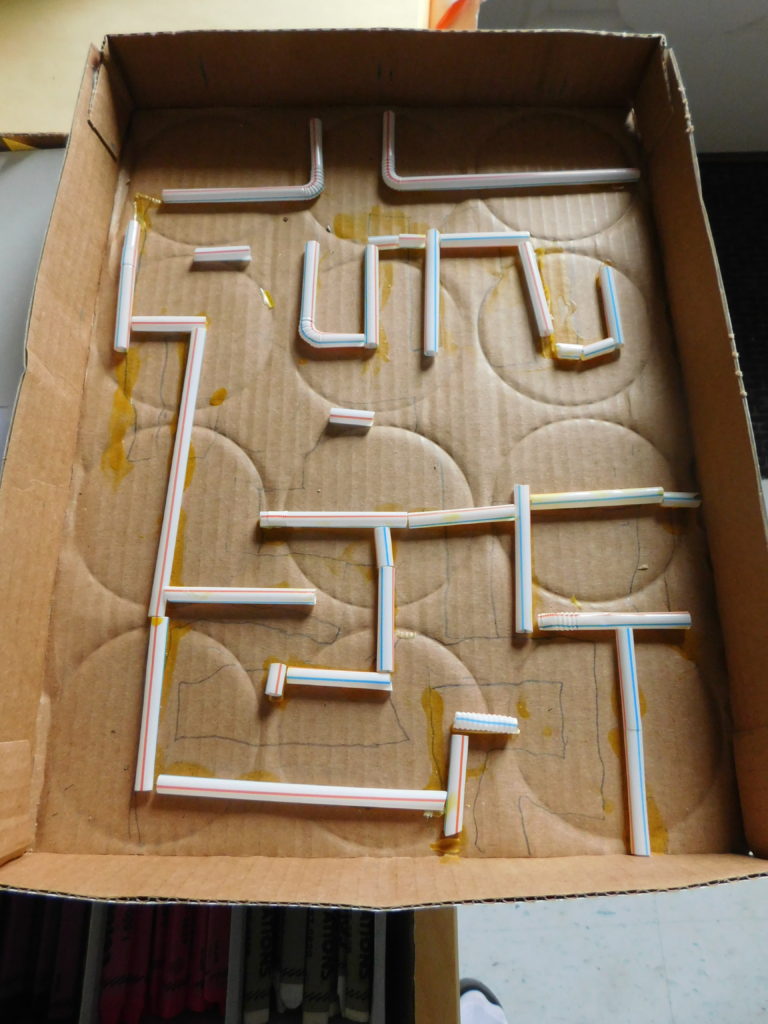
Turn the maze into a history or literature challenge. Kids could design a maze to help American soldiers reach a fort, guide a character through a story, or even create an obstacle course based on a favorite book.
Kids can make the maze as simple or complex as they are able and even decorate the inside of the box to match their theme.
As people play their maze, they can share what it’s about.
Create a diorama– I remember this was really popular as a kid. Dioramas can show a scene from a book or a moment in history, model a biome in science, or demonstrate geometric shapes in math by building a town or a room.
Construct a small tabletop puppet theater– A box can become a very simple puppet theater even if it is cutting out a window and drawing curtains. Then kids can create short shows to demonstrate their learning for any topic you choose.
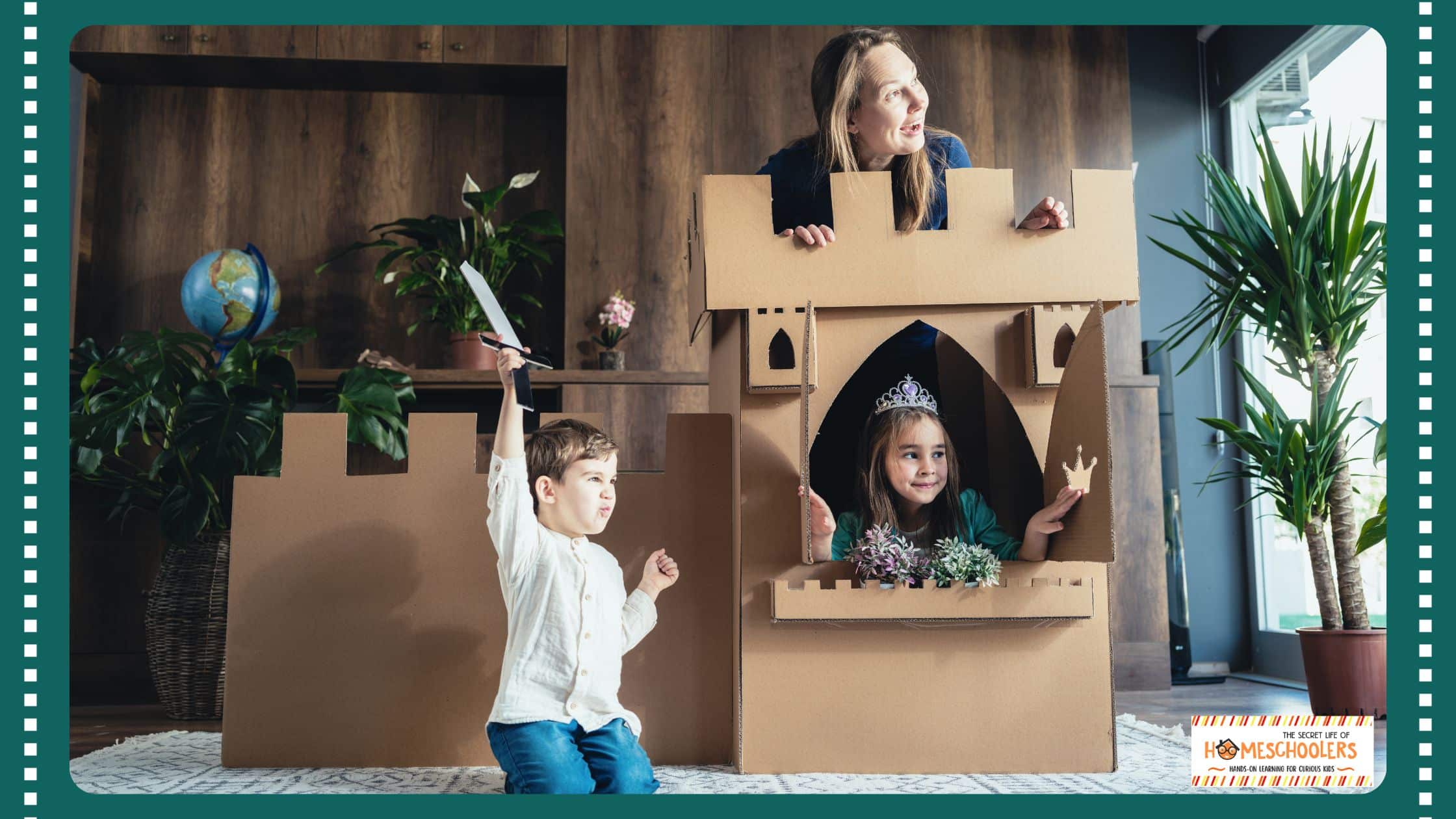
Make Houses, Castles, Spaceships, Stores, etc. – I know this is common, but it really has a lot of benefits. Building a castle, spaceship, or whatever can turn into hours of imaginative play as kids explore what they’ve learned. I loved this kind of thing in my daycare. The two-year-olds and my school-aged kiddos could all have fun with this and play around with things they learned.
Vehicles– As I mentioned above, while studying ancient Rome, we made chariots and raced them in the basement. You could do this with other vehicles throughout history, too. My kids still remember what we were studying because of those chariot races.
To make the vehicles, the kids decorate the box, step into it (removing the bottom), and either hold it while racing or strap it to their shoulders like suspenders.
Low-Prep Tip:
Keep one large tote or corner of your garage for cardboard boxes of different sizes. When inspiration strikes, you already have supplies waiting. The kids do the rest!
Learning Tip:
Don’t count these simple homeschool activities. You can have great discussions along the way. One great discussion starter is: Tell me more about what you built. This simple question gets them to think intentionally about what they are doing.
Painter’s Homeschool Activities
Painter’s tape or masking tape is perfect for indoor learning. It is especially great for those rainy days when kids are trapped inside. These homeschool activities get kids up and moving, which is especially helpful for kids with lots of energy (we all seem to have one in the family).
Why I love it: It gets kids moving while they review important concepts.
Grid Games– Get out your tape and make a grid with as many boxes as you want. It can be as simple as four squares, like you would for the childhood game, or a five-by-five grid. You choose. You can use it for letter, shape, color, and number review. Just place the letter, etc., in each box and call out an item, having kids jump from one square to the next.
Do you have older kids? Put in numbers and call out addition and multiplication facts.
You may be wondering how to make this happen inside. Put whatever skill you are practicing, like answers to multiplication facts, on a sheet of paper inside the square. You can tape it down in the corner, so it doesn’t get trampled.
This is also perfect for drawing with chalk outside.
Number lines or Timelines– Do you have a kiddo struggling with positive or negative numbers? Maybe you want a new way to work on addition and subtraction concepts. Make a number line.
Do you want a fun way to practice important dates in history? Create a timeline on the floor. Call out an event, and kids need to stand by the date they think it took place.
Review Game– Here is another fun homeschool activity. Place several long strips of tape on the floor so they look like ladder rungs. The kids stand on the first line. Ask a question about something you want to review; if the kiddo gets it right, they move to the next line. Whoever gets to the last line first wins. If it is only one child, assign points to each line and keep score. They can try to beat their last score the next time.
Variations:
If a child gets a question right, they move ahead; if they are wrong, they move back.
Multiple kids: Ask one child a question; if they get it wrong, see if another can answer, or ask a question and let the first kid to raise their hand answer.
Shape Hunt- Tape shapes around the room and call out:
“Fin” the hexagon.”
“S” a”d on an acute angle.”
“W”e”e is the cone?”
It’s easy and very engaging.
Low- Prep Tip:
- Don’t spend a lot of time making number cards, color cards, etc. Flash cards or a deck of playing cards may be a quick solution.
- You can also print off the cards you need or photocopy them from a workbook.
- For timelines, you can quickly write some dates on a strip of paper. You don’t have to get fancy.
- Don’t try to put together too many or review. Pull out your teacher manual and find some questions.
Learning Tip:
Movement is an easy way to make a homeschool learning activity more multisensory: the more senses involved, the easier the information sticks.
Craft Sticks and Toothpicks Homeschool Learning Activities
It is always a good idea to keep craft sticks (sometimes called popsicle sticks) and toothpicks on hand. You can do so many things, from art to math to science, with them. They are such handy items for fun homeschool activities. Plus, you can adapt many craft-stick activities to use toothpicks.
Why I like it: Both materials are so versatile and easy to work with. You can also use them in just about any subject.
Craft Sticks:
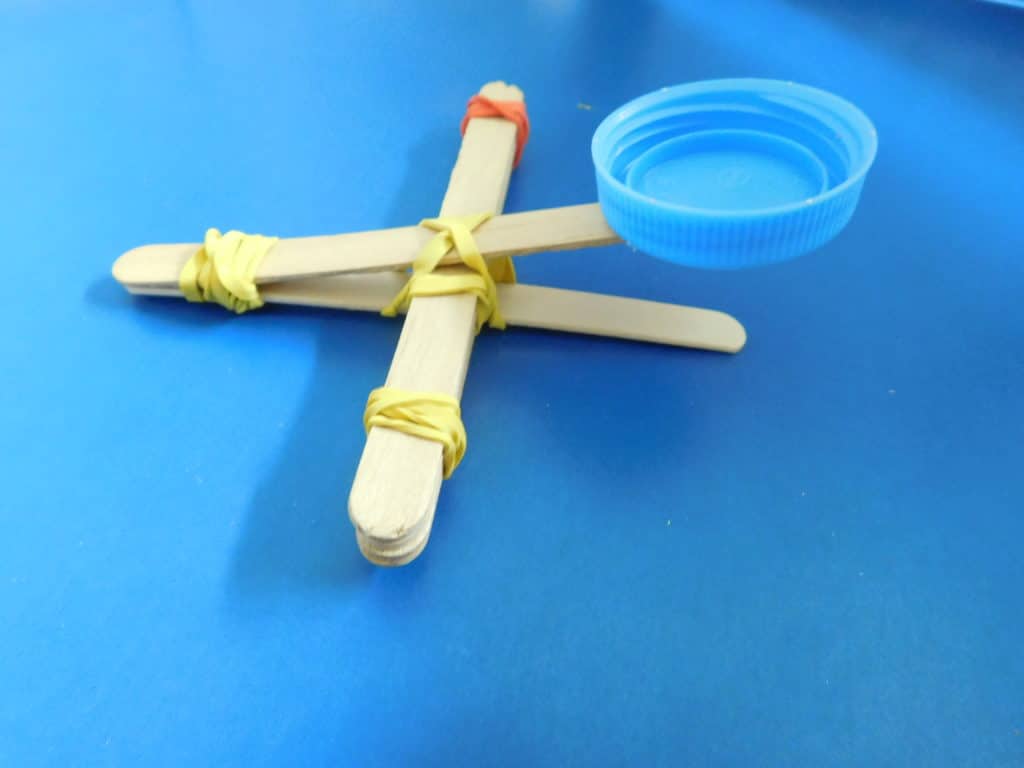
Catapults– It’s as easy as craft sticks, a rubber band, some hot glue, and a milk cap. Catapults are perfect for teaching physics and math concepts such as simple machines, trajectories, and data measurement.
Tower (or Skyscraper) Challenge– How high can you get your tower to stand? This can be a lot of fun, and you can connect it to famous towers or skyscrapers.
Make 3-D geometric shapes– This is a perfect way to build those spatial skills by asking kids to re-create 3-D shapes.
If your kids enjoy building with craft sticks, don’t miss my Popsicle Stick STEM Challenges, where you’ll build bridges, catapults, engineering challenges, and more.
Toothpicks
Towers– Grab some toothpicks and mini marshmallows or gumdrops, and you are good to go. Kids learn about weight distribution and the importance of building a good base in structures. It will work well with science concepts and engineering, and you can even tie it to historical structures (e.g., the Leaning Tower of Pisa).
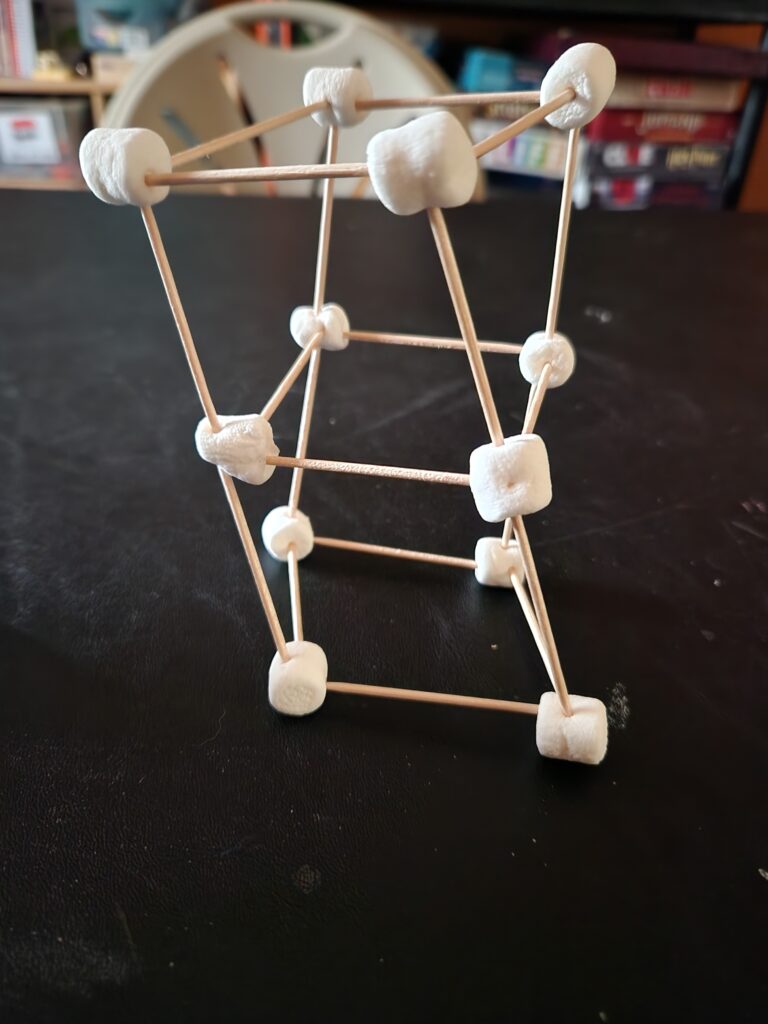
Bridges– All you need are toothpicks and some way for the kids to hook the toothpicks together. Use marshmallows, tape, etc. This is great for problem-solving.
Geometric Shapes– Like with craft sticks, you can build 2-D or 3-D shapes with toothpicks, too.
If you want more ideas beyond toothpick engineering challenges, here are some additional toothpick activities (and related learning ideas).
Low-Prep Tip:
- Buy a big box of craft sticks at your local craft store or the craft section in stores like Walmart.
- Pick up a few boxes of toothpicks with your groceries and keep them with your homeschool supplies.
- Since these are critical-thinking activities, kids will think about how to do them. If you don’t have an item (like mini marshmallows), substitute tape or glue.
Learning Tip:
Engineering projects are a great opportunity to test and retest. Kids learn to solve problems and think critically about how things work and why. Ask your kids:
- Why did you build your project that way?
- What made it difficult?
These questions get kids to think more deeply about what they are doing.
Paper Plate Learning Activities
There are so many great paper plate homeschool activities for learning beyond masks or craft projects.
Why I love it: Paper plates are inexpensive manipulatives for math, science, art, and reading. Plus, they are easy for kids to use.
Make a Sundial – Learn about the movement of the sun and how people told time before clocks. All you need is a paper plate, a pencil, and a sunny day. A quick internet search for ‘pap’r plate sundial’ will give you several free tutorials.
Fraction Manipulatives– You don’t need expensive commercial fraction bars/circles. You and the kids can make them out of paper plates. Kids will love using their own fraction pieces. Plus, it reinforces what they are learning.
Word Family Practice – Turn a paper plate into a fun reading wheel Write the beginning letters or blends of a word family (such as st, h, l, b, and s) around the edge of one paper plate In the center, write the word ending (like -and) Cut a wedge out of a second paper plate and attach it to the first with a brass fastener so it spins. As children turn the wheel, they can read each new word family member (stand, hand, land, band, sand). Better yet, let your kids help make the wheel before they use it. Creating the activity is part of learning (Plus, low prep for you!)
Paper Plate Clocks – Turn a paper plate into a hands-on teaching clock using a marker and a brass fastener. Kids reinforce time-telling skills as they build their own clocks, and they can continue using them throughout the day. Before each activity, have them set their clocks to the correct time. For example, if snack time is at 9:15, they can set their clocks to 9:15 and compare them to the wall clock.
Low-Prep Tip:
Make sure you add a package of paper plates to your homeschool area so they don’t use them for other things. I know I’ve had to get paper plates for an activity only to realize we used them at the last family get-together.
Learning Tip:
Have the kids create these activities with you. When they make them, they reinforce their understanding.
Clothespins Learning Activities
Clothespins are one of those simple supplies that are surprisingly useful in a homeschool. Besides clipping chip bags shut (please tell me I’m the only one who does that!), you can also use them for all kinds of hands-on learning activities. I used clothespins all the time when I taught preschool because they helped strengthen little hands and made learning more interactive.
Why I like it: Clothespins are a great way to encourage independent learning in a fun way. It’s different from a basic worksheet or flashcard.
Independent Learning Games – Clothespins are perfect for creating simple self-checking activities. Kids can clip the correct answer to practice skills like:
- Counting
- Matching uppercase and lowercase letters
- CVC words
- Long and short vowel words
- Beginning blends
- Math facts
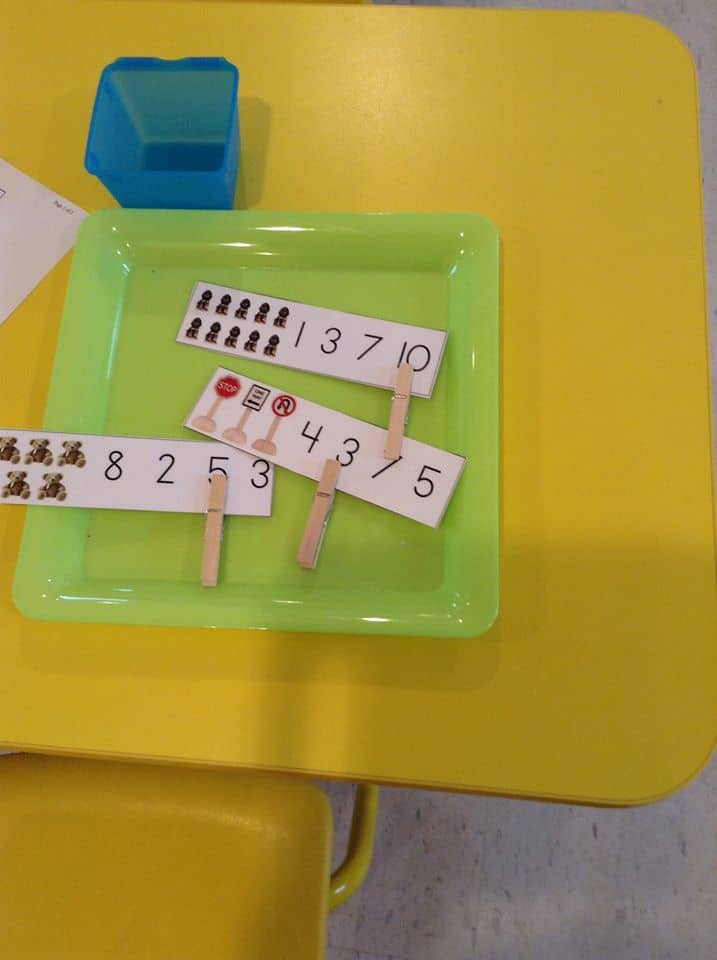
There are lots of free printable clip cards online if you search for the skill you want to practice. Just print, laminate if you’d like, and let your kids practice independently.
Fine Motor Practice- One of my favorite Montessori-inspired activities was hanging a clothesline across the room and letting children “do the laundry.” I’d give them a basket of small washcloths and have them clip each one onto the line.
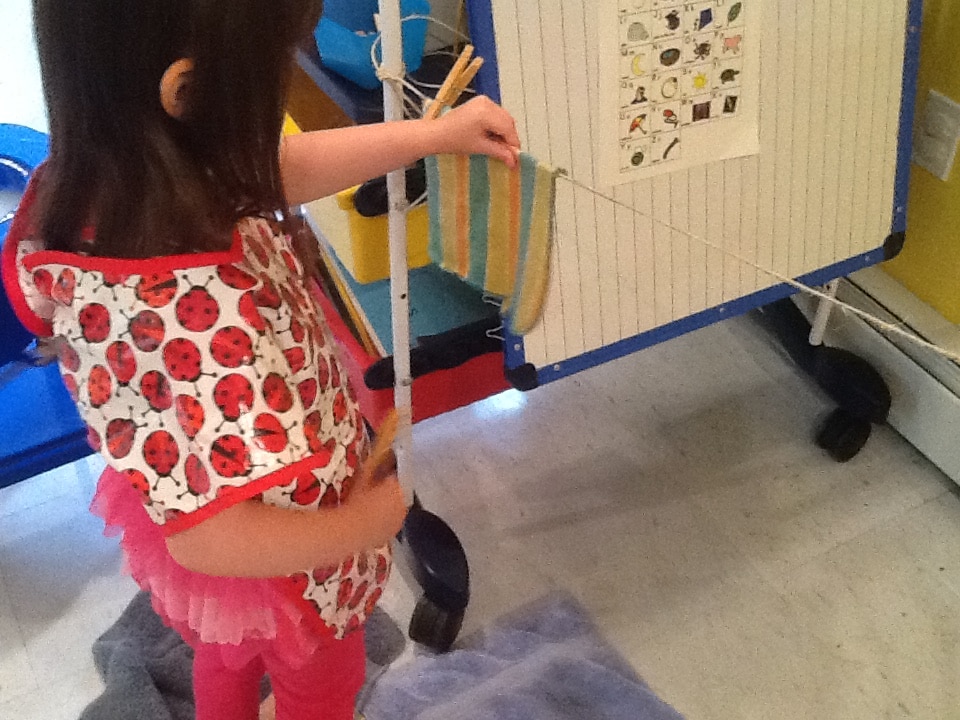
The kids thought they were playing, but they were actually strengthening the small muscles in their hands that are important for handwriting, cutting with scissors, and many other everyday tasks.
Story Sequencing- Hang a clothesline and give your children a set of story sequencing cards. As they retell the story, they clip each picture onto the line in the correct order.
You can use sequencing cards that show life cycles, fairy tales, historical events, or even the steps of a science experiment. It’s a simple way to practice comprehension while adding a little movement and fine motor practice to the lesson.
Low Prep Tip:
Keep one basket with clothespins, a short clothesline (or yarn), and laminated clip cards (If you don’t have a laminator, use cardstock paper). Then everything is ready whenever you need a quick independent activity.
Learning Tip:
Using clothespins turns ordinary skill practice into something hands-on, while also strengthening the muscles they’ll use for handwriting.
Creating Memories
Some of the best homeschool memories don’t come from expensive curriculum or elaborate projects.
They come from a cardboard box that became a castle.
A roll of painter’s tape that turned the floor into a giant game board.
A handful of craft sticks that became a bridge.
Those are the moments our kids remember.
So this week, don’t try to create the perfect activity. Pick one simple idea. Use what you already have. See where curiosity takes you.
And you know what? The simple activities are probably the ones your children will remember years from now.
If you’d like to explore more quick, easy, hands-on ideas, you might want to check out my Family Learning Lab Starter Kit: 5 Days of Mini Learning Labs. It’s planned for you in an easy-to-use format. Click below to learn more.
Happy Homeschooling!

I really like the idea of you the things you have on hand, rather than buying more stuff. For younger kids, you don’t really need a lot of fancy stuff to keep them occupied and the simpler things forces them to use their imaginations.
Thank you for reaching out! I agree. You can do so much with materials around the house, especially with younger kiddos. It’s also an inexpensive way to add fun learning activities into your day.
Great ideas that are better than another worksheet!
Thanks! I agree.