

Sometimes, the walls of your home feel just as limiting as those of a traditional classroom. When your kids start getting a little wiggly (we’ve all been there), it might be time for a change of scenery. What if your backyard could become your new homeschool classroom? Your backyard can be transformed into an outdoor learning environment.
Outdoor learning isn’t just refreshing. It’s powerful. With a bit of imagination (and some sunscreen), your yard can turn into a place where real, meaningful learning happens naturally.
Science? Absolutely.
Nature study? For sure.
Creativity, exploration, and hands-on experiences? Yes, yes, and yes.
Table of Contents
- Why Outdoor Learning Works So Well
- Start with Your Backyard Vision
- Outdoor Learning Ideas for Science
- Outdoor Learning Through Nature Study
- Creative Outdoor Learning Ideas
- Make Outdoor Learning Part of Your Homeschool Routine
- Final Thoughts: Outdoor Learning Is All Around You
Why Outdoor Learning Works So Well
With so many kids spending more time on computers (for school, for fun, and everything in between), outdoor learning gives them a chance to move, explore, and engage in a new way. Many kids actually learn better when they’re up and active. For some, hands-on outdoor activities can make learning really click.
If you’re already the kind of family that loves spending time outdoors, you might be familiar with Wild + Free groups or the 1000 Hours Outside challenge. But even if your outdoor time is more limited, you can still make outdoor learning work for your family and space.
Whether you have a backyard, a patio, or a local park nearby, here are tons of simple ways to make outdoor learning fun and doable, without adding more stress to your plate.
Start with Your Backyard Vision
Head outside with your kids and explore your space together. Ask:
- What would you like to explore outside?
- What sounds fun to build, observe, or play with?
- Where could we set up a science zone, garden, or creative corner?
When your kids help plan the space, they feel a sense of ownership, and they’re more excited to use it. Sketch a simple backyard learning map together. This isn’t about creating a picture-perfect setup. It’s about building a space that works for your homeschool.
Outdoor Learning Ideas for Science
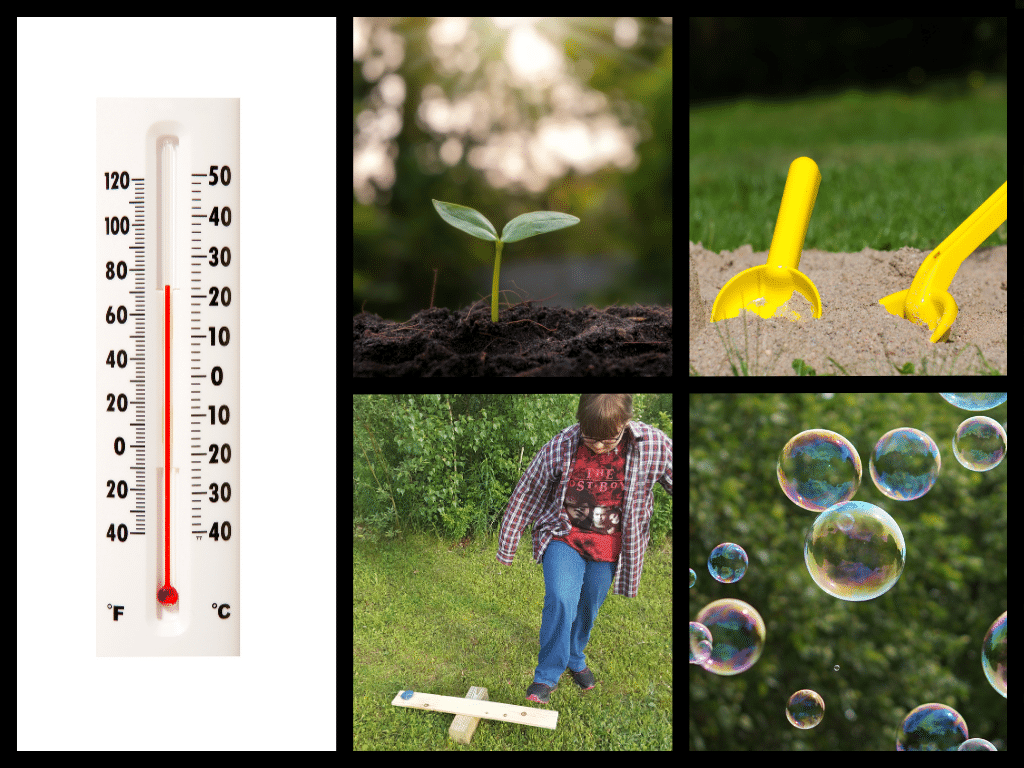
You don’t need fancy equipment to get science bubbling outdoors. Here’s how to build some easy science activities right into your yard:
Weather Station Wonders
Create a DIY weather station and explore daily weather changes. Use plastic cups for rain gauges, pinwheels for wind, and a simple thermometer. Your kids can decorate and set it up themselves!
You can:
- Track temperature, cloud types, rainfall, and even make predictions.
- Build a sundial.
- Explore cloud formation with a cloud-in-a-bottle experiment.
- Build a simple water clock and learn about time measurement and the concept of flow rate.
Plant Power Investigations
Transform a corner of your yard into a science garden that brings outdoor learning to life. Try planting seeds using different methods (such as pots, direct sowing, or transplants) and observe which ones grow best.
- Experiment with light, soil, and water conditions.
- Connect it to lessons on photosynthesis and plant life cycles.
- Keep plant journals to draw and measure growth.
- Build a mini-greenhouse and explore the concept of microclimates. You can make a simple greenhouse with cups.
Sandbox Science
Do you have a sandbox or even just dirt? How about a sand table outside? Great! Your kids are ready to learn some incredible things.
- Dig for buried “artifacts” like archaeologists or paleontologists (tie it to history or science units). We did this as part of our ancient history units.
- Compare wet vs. dry sand to explore texture and absorption.
- Build sandcastles and test erosion with water.
- You can even conduct mini-experiments with water flow and drainage.
Backyard Physics
Explore motion, gravity, and friction with outdoor STEM fun. STEM is a lot of fun, but taking the learning outdoors makes it even more enjoyable!
- Try a zipline STEM challenge using string and toys.
- Learn about kinetic and potential energy with a backyard slide.
- Build LEGO balloon cars and race them on different surfaces (dirt, pavement, wooden picnic table, etc.).
- Explore simple machines, such as pulleys, levers, and wedges. If you need help with simple machine ideas around the house, check out this site. You might also like to make your own simple machine, a catapult, with the kids. My scouts also made a larger one to practice their lashing skills. (insert picture)
Bubble Fun
Explore bubbles and the science behind them. This bubble science experiment will be a lot of fun for the kids, and they will learn a lot.
Outdoor Learning Through Nature Study
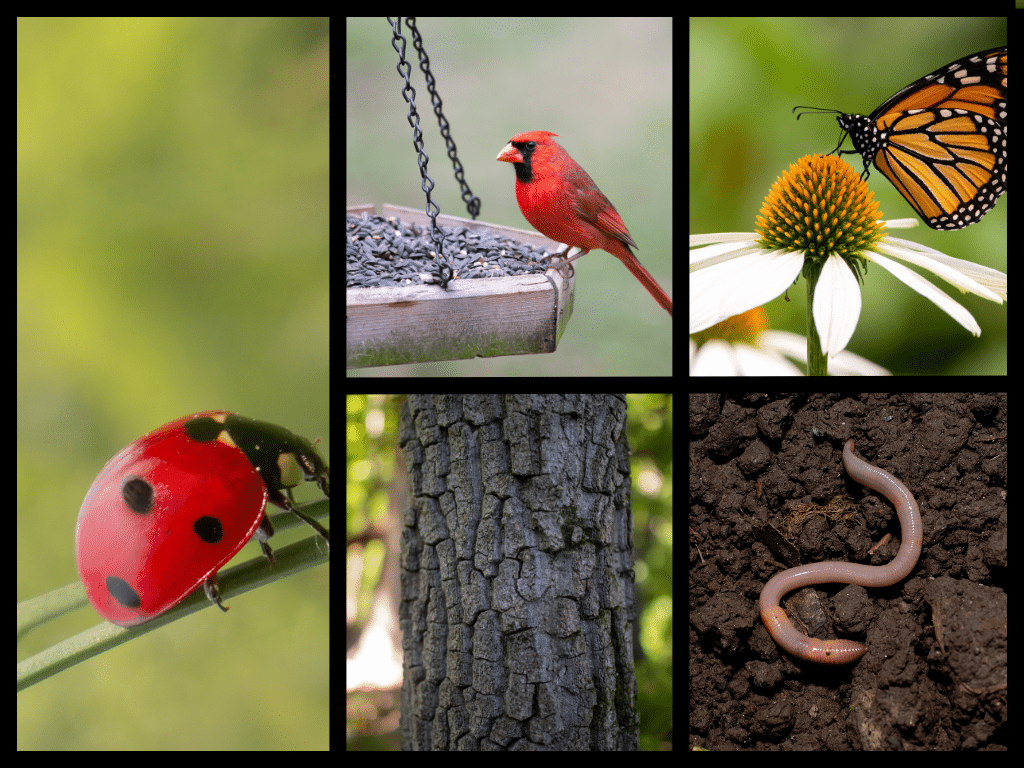
There are so many ways to study nature. Let’s explore a few outdoor learning opportunities to take advantage of.
Outdoor Learning with a Backyard Bug Hunt
Kids love bugs, and bugs are full of learning opportunities!
- Provide magnifying glasses, bug jars, and a field guide.
- Build a “bug hotel” from twigs and leaves.
- Talk about the roles bugs play—pollinators, decomposers, and more.
- Design a “Bug Observation Zone” with logs, rocks, and leaf piles.
- Create a designated area for building a small nature exploration zone. Use fallen leaves, branches, and rocks to create hiding places for insects, millipedes, and other small invertebrates.
- Provide shallow dishes of water and observe the fascinating mini-ecosystem you’ve created.
Celebrate the little creatures that often go unnoticed and learn all you can about them!
Backyard Birdwatching
Set up bird feeders and create a bird journal.
- Use free apps like Merlin to identify birds by color or song.
- Track what birds visit your feeders, draw them, and learn about migration and nesting.
- Set up bird houses. I just received a gift that’s a birdhouse with a camera (by Birdfy), so I can look at my phone and watch birds lay eggs and see them hatch.
- You can even create your own simple bird unit study to do with the kids. Depending on your child’s age and interest, you can make it very simple or more elaborate.
Butterfly Gardens
Butterflies are so pretty. You can help the kids learn about the butterflies in your area and what flowers they prefer.
- Order caterpillars to raise and release.
- Discover the butterfly life cycle and explore local species in your area by planting your own butterfly-friendly garden.
Tree Treasure Hunts for Outdoor Learning Fun
Embark on a backyard tree scavenger hunt. Identify different types of trees based on their leaves, bark texture, and overall structure. Learn about tree life cycles, their role in the environment, and the fascinating world of photosynthesis. I do this all the time with my scouts, and it is a lot of fun.
- Identify trees by leaf shape, bark texture, and size.
- Do leaf rubbings with crayons and paper (great for younger kids).
- Measure tree trunks and talk about tree ages and roles in ecosystems.
Wonderful World of Worms & Composting
Composting? Yes, please.
Composting is a great way to utilize leftover fruit and vegetable scraps at home. So, why not start a compost bin and explore the world of decomposition and nutrient cycles? You can also take it a step further and study WORMS!
- Add worms to a compost bin and observe how they help break down organic matter.
- Talk about nutrient cycles and soil health.
- Let kids dig in and discover all kinds of creatures that live underground.
Creative Outdoor Learning Ideas
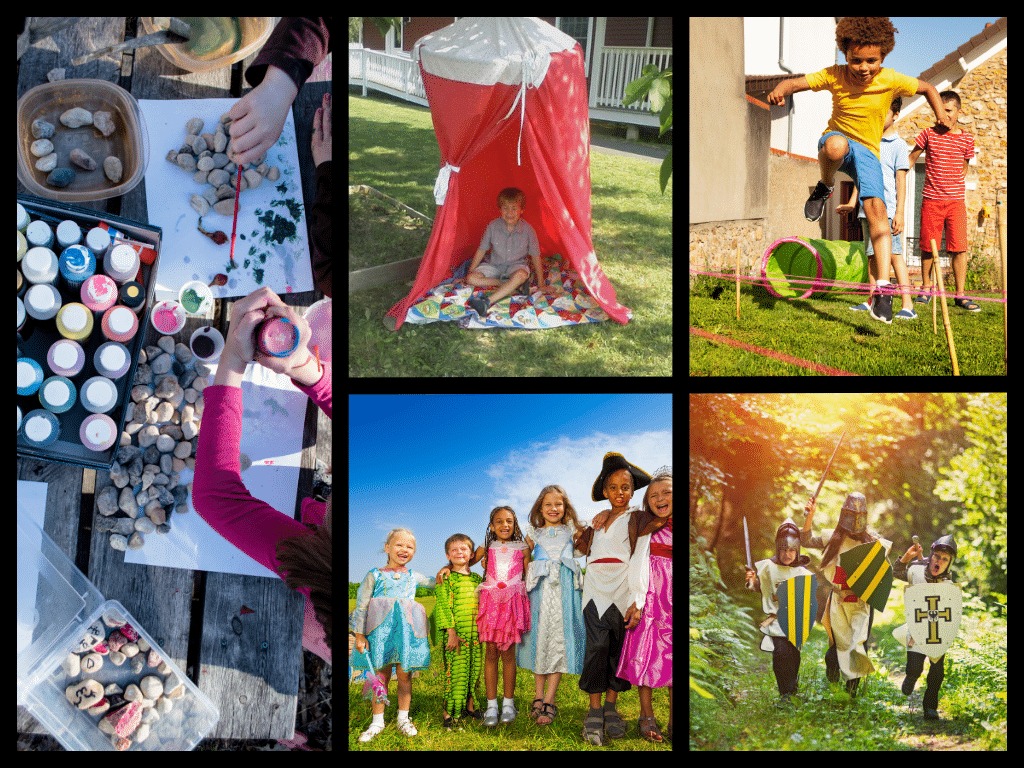
Your backyard isn’t just a science lab. Outdoor learning can also be in the form of a stage, an art studio, a gym, or even a time machine.
Backyard Art Station
Set up a container of outdoor art supplies: chalk, paint, paper, and natural materials. Then let the outdoor learning begin!
- Create “nature collages” from leaves and twigs.
- Paint rocks, make leaf/bark rubbings, or make leaf prints with paint.
- Turn fence panels into a rotating art gallery! Put artwork in page protectors or gallon-sized ziplock bags.
- Experiment with color mixing by combining natural dyes from different flowers, leaves, fruits, and vegetables.
Storytelling Under the Sun or Stars
Use the natural world as a source of inspiration for storytelling. Create fictional stories around the insects you observe or imagine adventures in the constellations. Bonus: Write the stories down later on for some superb writing.
Set up a reading nook with blankets, lanterns, and pillows.
- Have themed story nights (or days) — fairy tales, animal adventures, or science fiction.
- Let kids make up their own stories to tell.
Backyard Olympics
Combine learning and movement with a fun backyard game day. Organize outdoor games that incorporate math and physical activity.
Find simple ideas like these to make learning more fun than ever!
Host a backyard games day!
- Try long jumps (measuring distance), water balloon tosses (exploring angles), or plant ID relays. You can mix learning with physical challenges.
- Keep score with sidewalk chalk and rotate roles.
If you have middle school kids, I have some fun outdoor math games they can give a try. It’s the perfect way to incorporate outdoor learning with math.
Open-Air Theater
Turn your yard into a stage and put on a play!
- Write a simple script based on what your kids are learning.
- Use leaves, sticks, or flowers for costumes and props.
- Invite family or neighbors to come watch the show.
History Comes Alive Outdoors
Make history interactive by reenacting significant events in your own backyard.
- Create simple costumes and props.
- Try themed activities like chariot races, sword fights with shields, or setting up a pretend ancient village. We set up a sumo wrestling ring when studying Ancient Japan, and even set it up according to traditional customs (as best we could). Check out the video below.
Make Outdoor Learning Part of Your Homeschool Routine
Here’s how to start small and make it stick:
- Let the Kids Help – When they help design the space or choose the activities, they’re more engaged.
- Choose One Activity a Week – You don’t have to do everything. Start with birdwatching or a compost bin and build from there.
- Create a Simple Routine – Maybe Friday becomes your “outdoor learning” day, or start each morning with 30 minutes outside.
- Keep a Backyard Journal – Track discoveries, sketch what you see, and record questions to explore later.
You can also take the homeschool strewing approach. If you aren’t familiar with “strewing,” it is the act of placing learning materials around to encourage kids to naturally engage with them.
For instance, you could set up a “bug hotel” and lay out magnifying glasses, bug nets, and bug identification cards. Kids might then go over and explore that area while playing outside.
Want some help planning this? Journal pages for the kids to document learning? Get your own planning sheets and journal pages below.

Final Thoughts: Outdoor Learning Is All Around You
You don’t need a fancy curriculum or special tools to make outdoor learning part of your homeschool. All you need is a little curiosity, some fresh air, and a willingness to explore.
So go ahead—grab that notebook, step outside with your kids, and see where the backyard takes you. Outdoor learning might just become your favorite part of the homeschool day.
Happy Homeschooling!

Not all classrooms have four walls (and it’s better that they don’t). Great ideas!
Thanks, Jenn! I’m hope this helps some families.