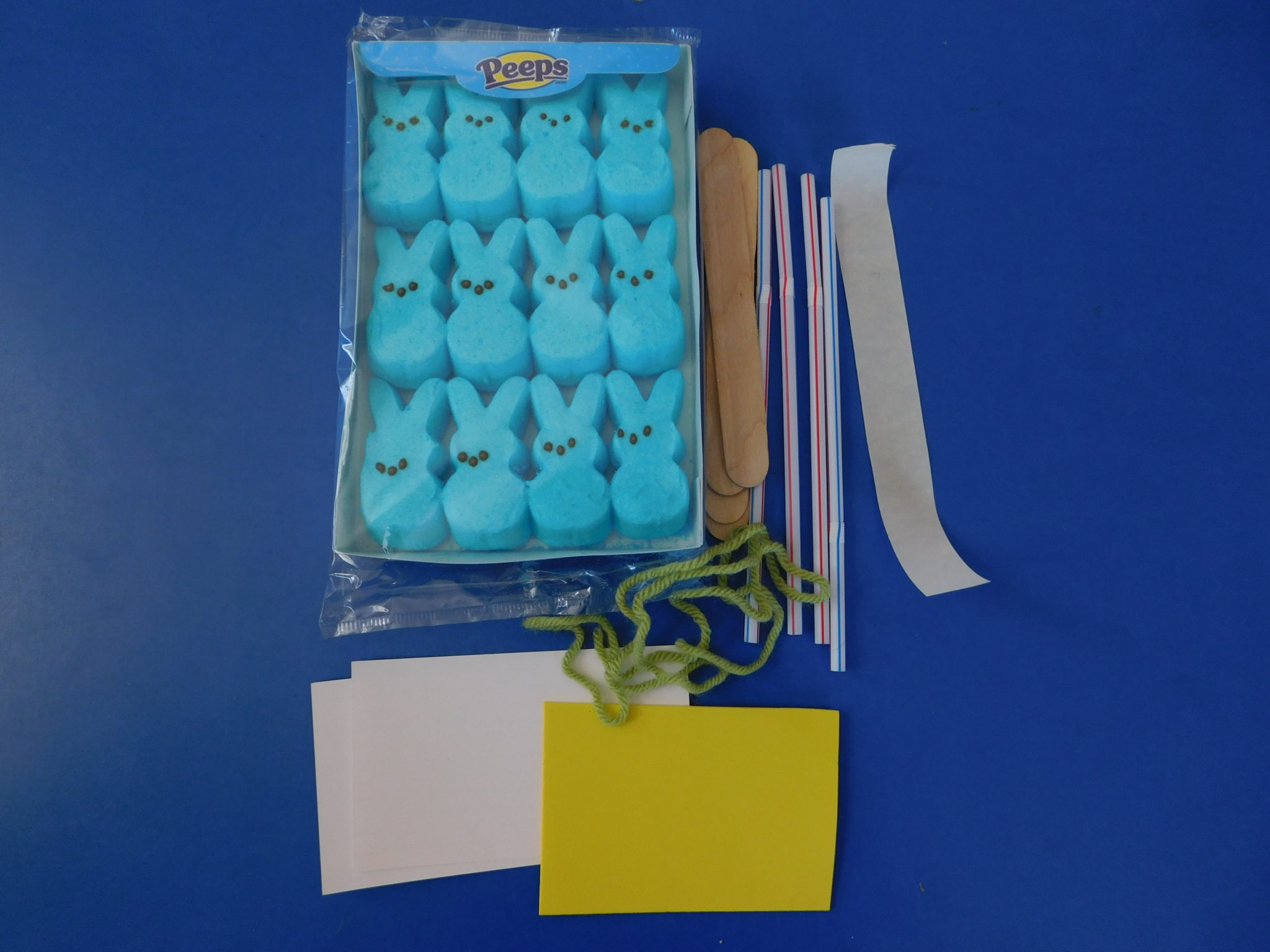

PEEPS are back on the shelves, and whether your kids love them or just love playing with them, this is the perfect time to grab a box. Instead of just eating them (or leaving them to fossilize in the pantry 😂), put them to work in the Easter Boat Challenge: a hands-on STEM activity that’s equal parts science lesson and total chaos.
Whether you’re a homeschool family looking for a themed activity or just want a fun Easter afternoon project, the Easter Boat Challenge delivers every time.

What Is the Easter Boat Challenge?
The Easter Boat Challenge is a classic STEM engineering activity with a holiday twist. Kids are given a small set of craft materials and asked to build a boat. It needs to be one that can carry a PEEPS bunny across a “flooded river” without sinking.
It’s low-prep, low-cost, and genuinely exciting. Kids get to design, build, test, and improve their boats. The PEEPS bunny is their passenger. The kitchen sink is the river. Let the chaos begin.
On a side note, if you don’t like promoting the Easter Bunny, you can use the PEEP Chicks. Kids can build a boat to get the chick across a flooded river.
The Challenge Story: “The Easter Bunny has come to a flooded river. He needs to get across. Build a boat or a floating device that he can use. Make it sturdy because he cannot get wet!”
What You’ll Need
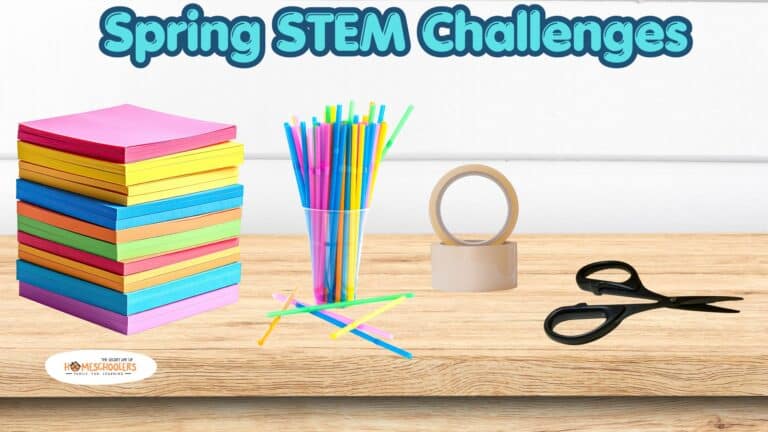
The beauty of the Easter Boat Challenge is that you only use basic craft supplies. Here’s the full materials list:
- 1 Bunny PEEP
- 4 large craft sticks (or you can use regular size, too)
- 3 feet of string or yarn
- 8 inches of tape
- 2 index cards
- 4 straws
- 1 piece of craft foam
- A sink full of water
That’s it! The limited supply is part of the challenge. Figuring out how to use what you’ve got adds to the challenge.
The Rules
The Goal
Build a boat or a floating device using only the provided materials. The PEEPS bunny must stay dry and afloat for at least 5 minutes. The boat must stay in one piece.
That’s all! No other restrictions. Kids are free to design however they want a raft, a boat with sides, a floating platform, anything. That open-ended freedom is what makes the Easter Boat Challenge such a great creative exercise.
Let the Building Begin!
Once you hand over the materials, stand back and watch the engineering brains kick in. Expect a lot of experimenting. Kids will try connecting straws in different ways, test how to attach the foam, and figure out whether tape or yarn holds better.
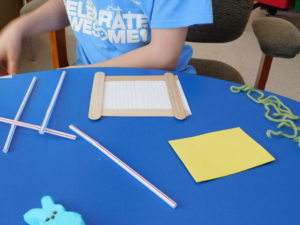
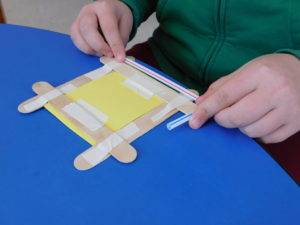
This is the scientific process happening right in front of you, and it’s genuinely exciting to watch.
From Our Experience
Both kids ended up building rafts instead of enclosed boats. Totally valid! One used an index card on the bottom held together with yarn. The other laid the craft foam on the base and relied mainly on tape. Two different approaches, same challenge.
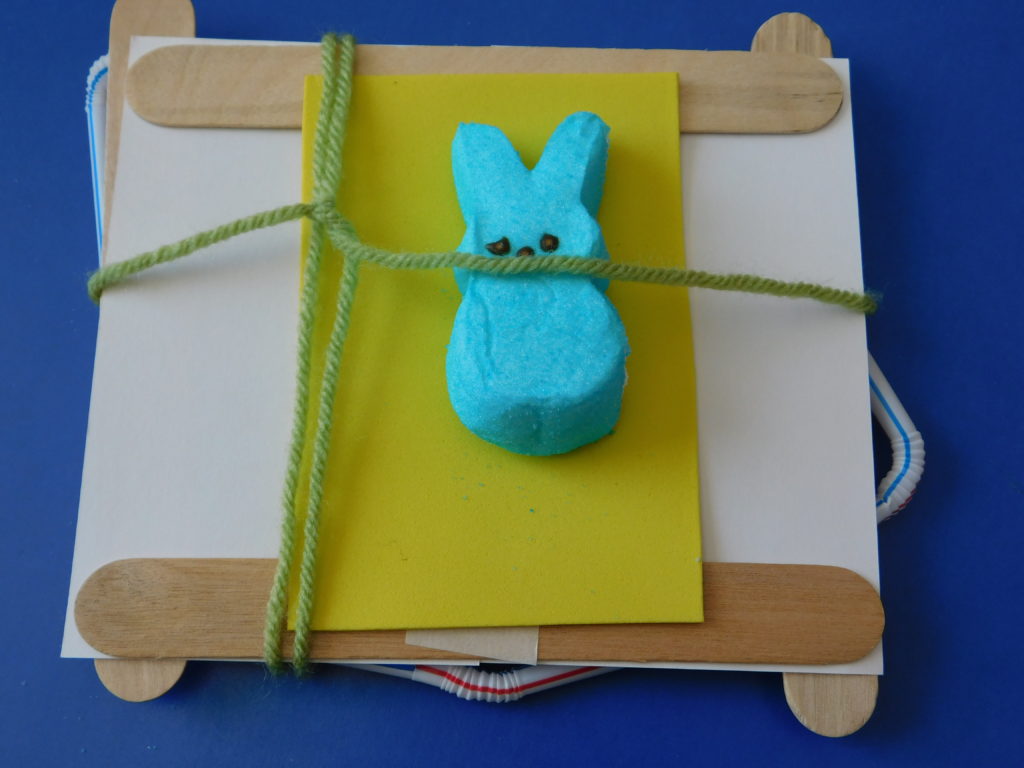
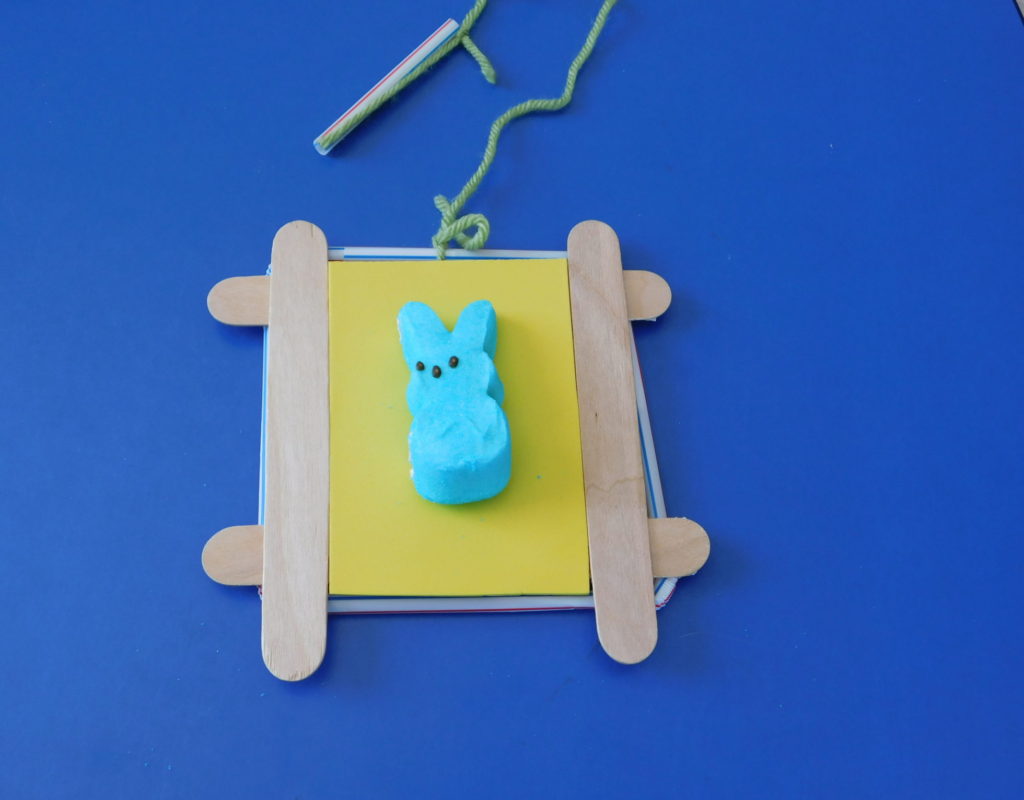
Pro tip: Don’t over-explain the design. Let kids interpret “boat” however they want. You’ll get more creativity and more learning that way.
Test Time: Will the Easter Bunny Float?
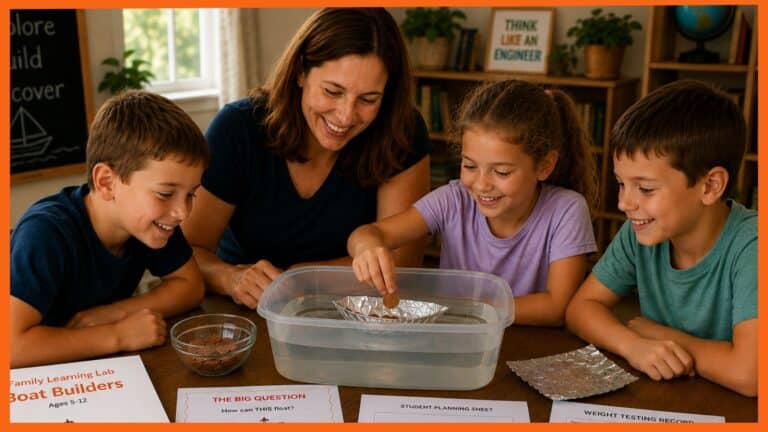
Fill your sink with a couple of inches of water. Have kids place their boats in gently, set the PEEPS on top, and start the timer. Five minutes might feel short, but it’s surprisingly suspenseful!
They Floated!
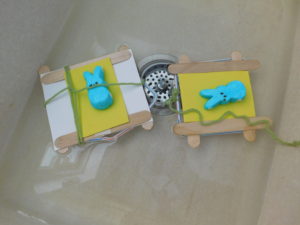
Both boats passed the Easter Boat Challenge. The bunnies stayed dry, and the boats held together for the full five minutes. One bunny did take an accidental face-plant in the water (oops), but that was operator error, not a design failure.
After the timer, take a closer look at each boat. You’ll probably notice some things starting to give (wet paper gets soggy, tape starts to peel). This is actually the best part of the Easter Boat Challenge: the natural discussion happens on its own.
What Did They Actually Learn?
This is where the Easter Boat Challenge earns its place as a real STEM activity, not just a cute craft. After testing, talk through what worked and what didn’t:
- Paper on the bottom = bad idea. It gets waterlogged fast.
- Tape weakens when wet — yarn holds its shape much longer.
- Straws are surprisingly good at keeping things afloat.
- Balance matters. An uneven load makes boats tip.
These are real engineering and physics concepts: buoyancy, material properties, and structural integrity, all wrapped in a holiday-themed package. Win!
My STEM Boat Challenge Pack takes learning even further! Kids learn about buoyancy and density (concepts used in this challenge). You can turn this simple STEM activity into a full learning experience, and kids can try out multiple boat designs with different materials. You can get it below.
Ways to Make the Easter Boat Challenge Harder
Want to extend the activity or add more challenge for older kids? Here are two easy ways to level up the Easter Boat Challenge:
Add Cargo
Have the bunny bring Easter treats, such as jelly beans or mini eggs. Now kids have to think about the extra weight and make sure the load is balanced so the boat doesn’t tip or the “cargo” rolls off.
Add Specific Design Requirements for the Easter Boat Challenge
Give specific requirements: the boat must have sides, a sail, certain dimensions, or be able to carry the bunny standing upright. Very specific requirements push creative thinking in new directions.
Either of these additions turns a 30-minute activity into a longer session, great for homeschool STEM blocks or rainy afternoon rabbit holes.
**You might also like The STEM Zip Line Challenge. **
Go Grab Some PEEPS!
The Easter Boat Challenge is one of those activities that require almost no prep but deliver big on learning and fun. All you need is a bag of PEEPS, some basic craft supplies, and a willing kid (or three).
Hand them the materials, read them the challenge, and watch them figure it out. Whether the Easter Bunny floats triumphantly or takes a sugary swim — everyone wins.
Happy Homeschooling!
** Originally published April 2019. This is an updated version.