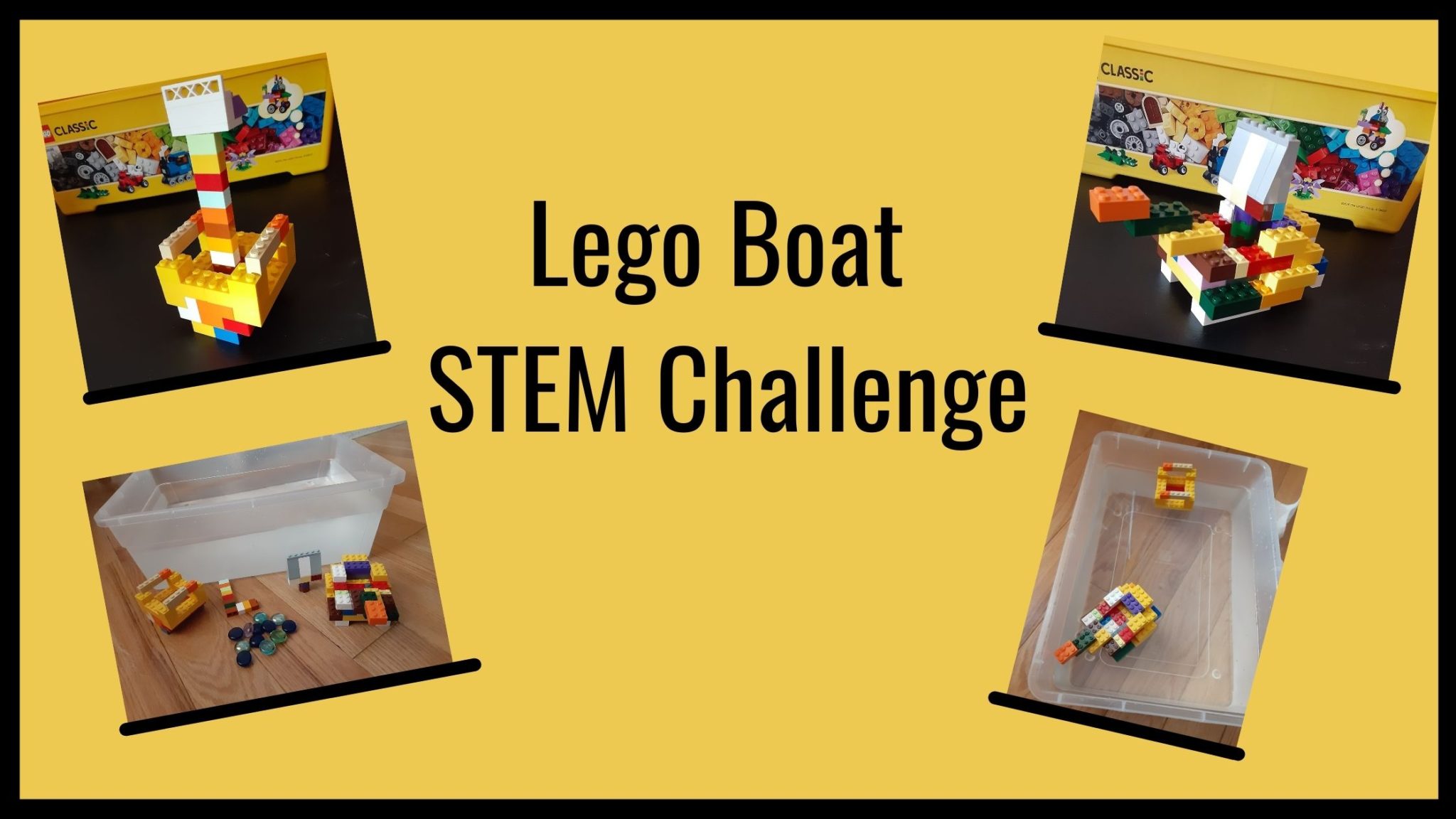

Are Legos a big hit in your home? I know they are here. My son can never have enough. He loves building all the cool sets. However, Legos are not only super fun to build with, but there are so many ways to incorporate them in your homeschool (or a Family Night). One fun activity to try is the LEGO Boat STEM Challenge.
Lego boats are sure to be a hit if:
- Your kids love Legos.
- STEM Challenges are a hit in your home.
- Your family loves doing challenges together.
If your child knows how to build with Legos, they are good to go. They should be able to figure out this challenge.
So, let’s take a look at this challenge.
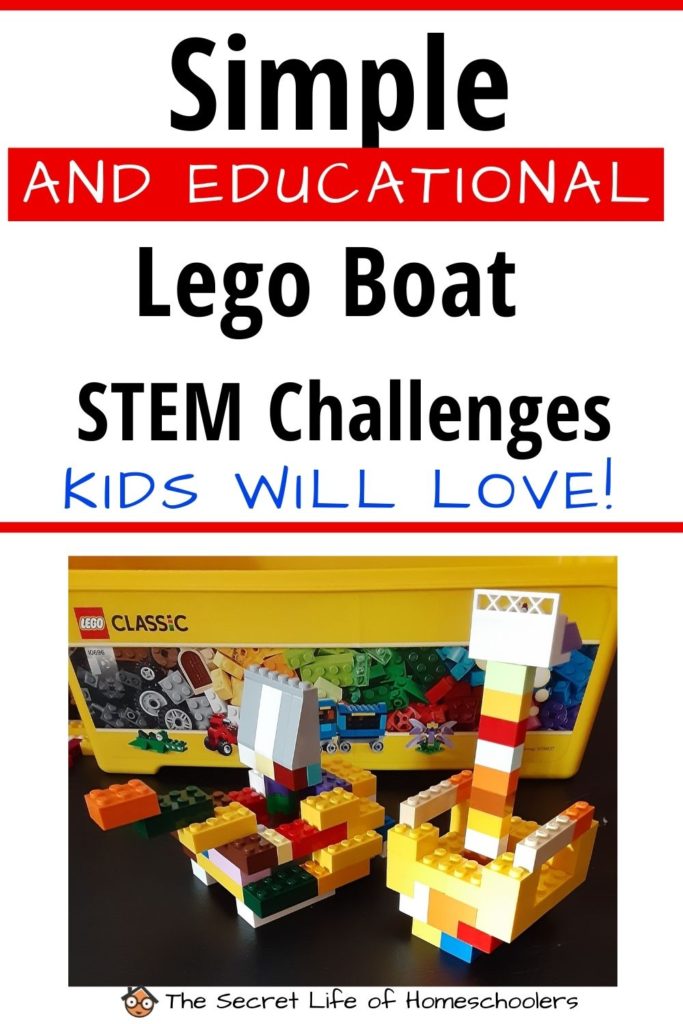
Lego Boats STEM Challenge
I have TWO challenges to try with Lego Boats. Both are great ways to have some educational fun.
Lego Boat Challenge #1
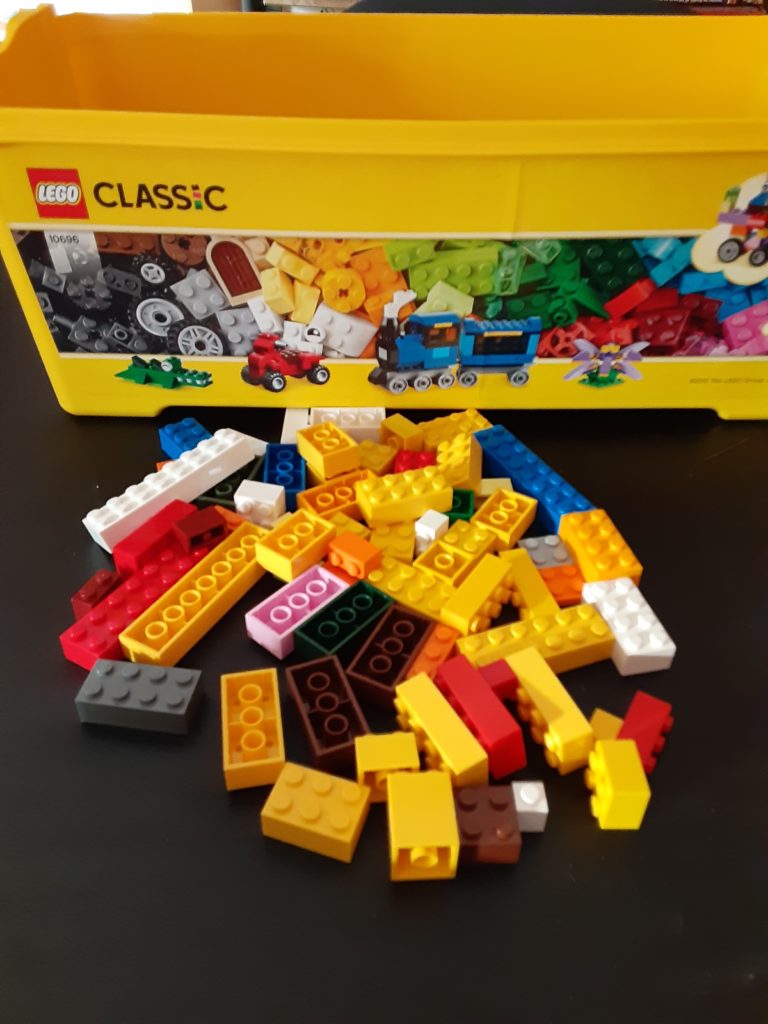
In this challenge, kids will build a Lego boat that can float.
You will need:
- Legos
- Sink, tub, or container to float the boats in
- Paper and pencil
Step 1- Build
Using Legos, build a boat you think will float.
Step 2– Test
Fill a sink, tub, or container with water. Test your boat. Gently place your boat in the water and see what happens.
Step 3– Analyze results.
- Encourage kids to try a few designs to see which one floats best. Make sure they jot down what works and what doesn’t work, so they know how to adjust their designs.
- Observe how other Lego boats do. By observing other boats, they might see some design ideas that will work better than others.
Step 4– Test Again
Test out the new design. Place your new boat in the water and see how it does.
Step 5– Discuss
Discuss how things went. Did the boats do better? Did things go as expected?
Topics for Discussion:
After kids have tested and retested their Lego boats, here are some things to ask them.
- Did your boat float the first time?
- If your boat worked the first time, why do you think it did?
- What changes did you make to improve your boat?
- What design seems to work well? A certain height? Width?
Write down the characteristics the kids thought worked well, and see if the kids can find anything in common among the ships that floated well.
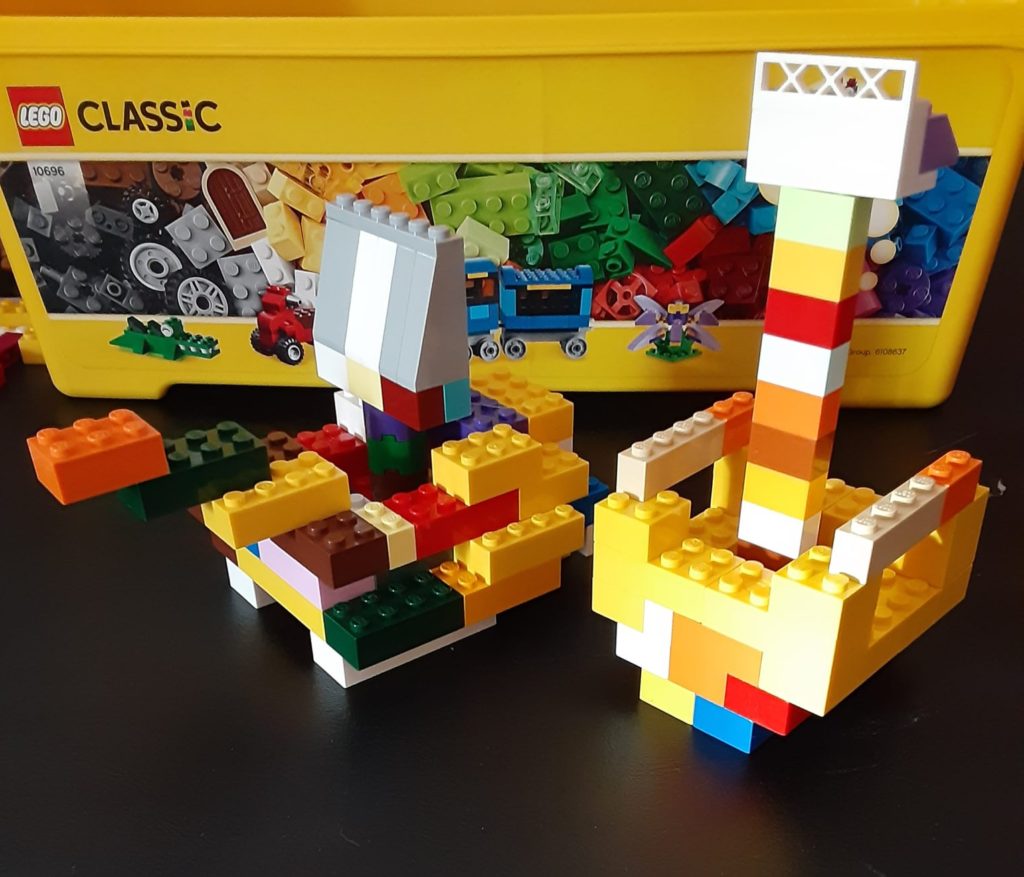
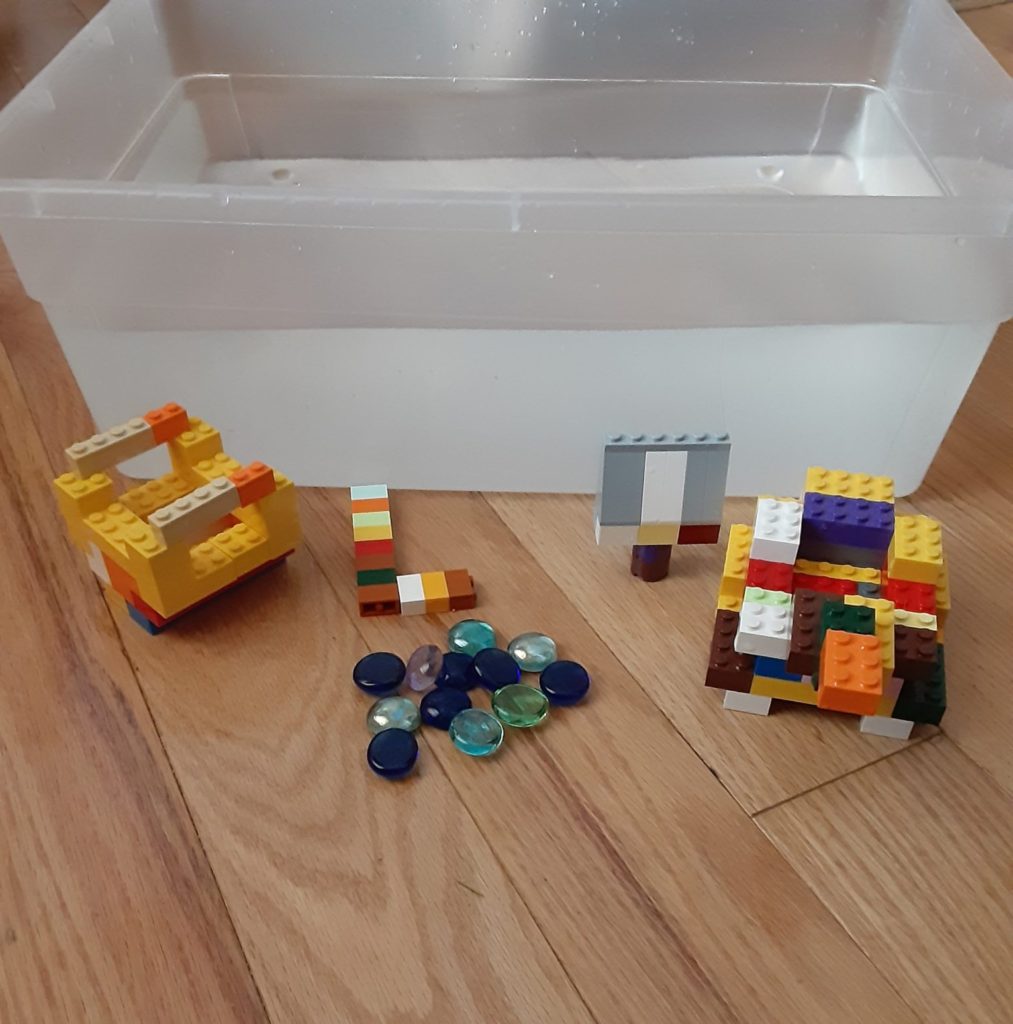
Here are some of the first designs of our boats.
Here is how well they floated.
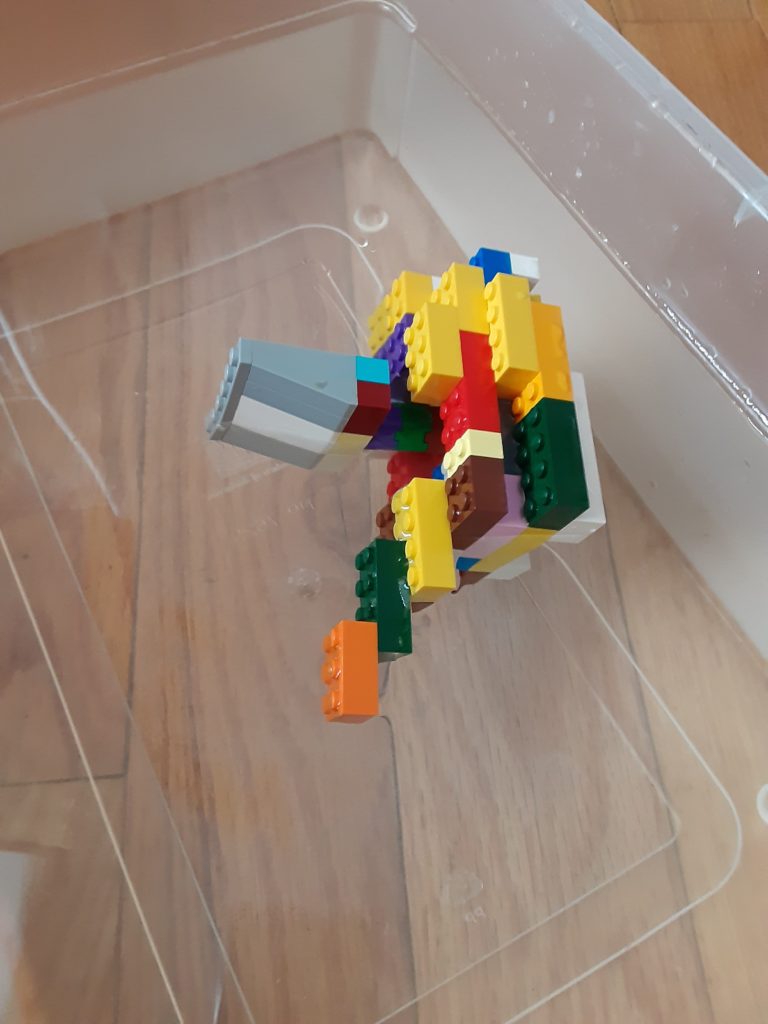
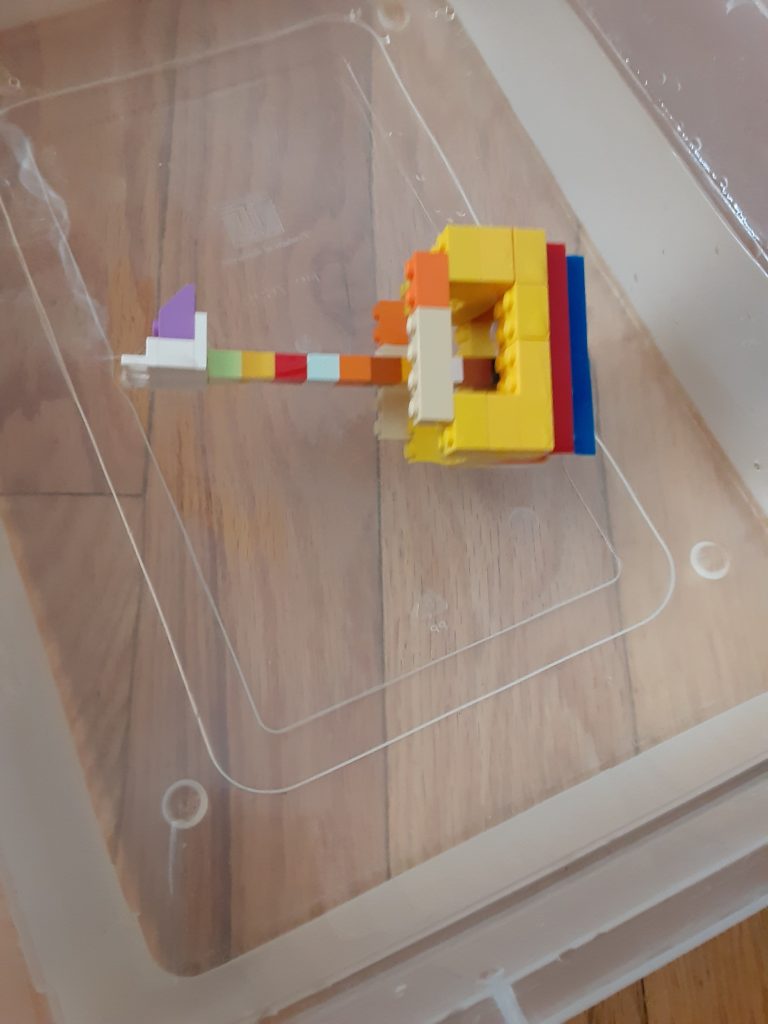
They capsized. So, we went back to the drawing board.
Our next attempts went better. Notice we took off our masts.
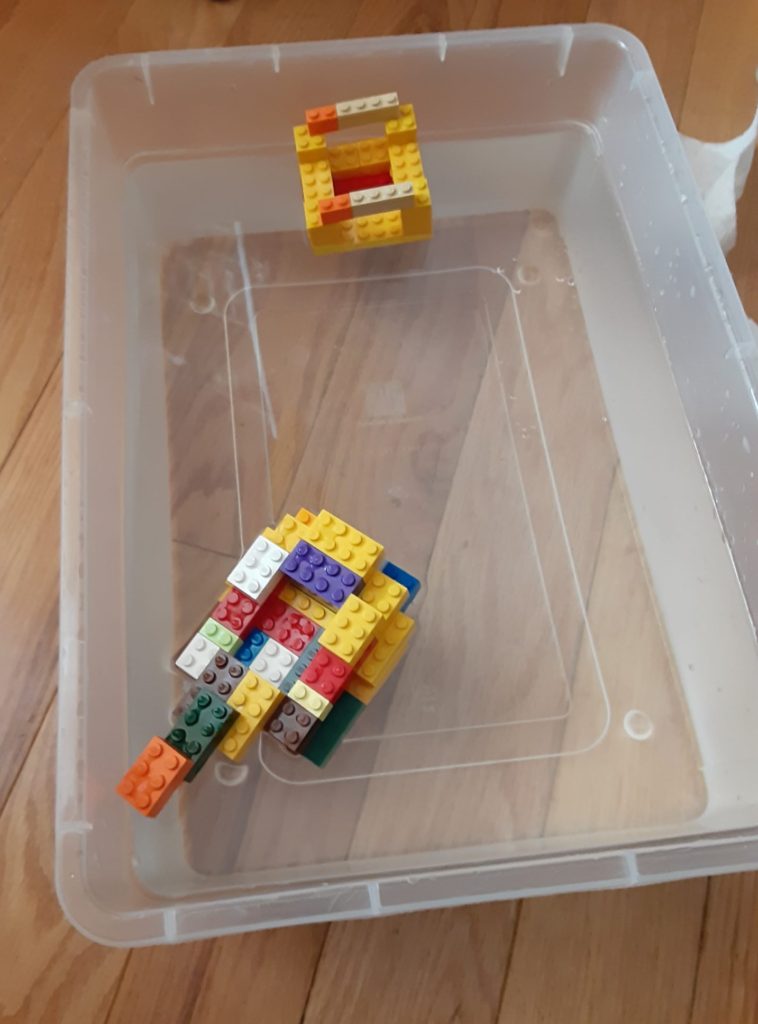
Even though our second Lego boats floated, they had a slight lean. I observed that, over time, they started to slowly take on water. Not a huge deal until we took on our second challenge (but more on that in a minute).
We also experimented with having a mast on our ships. Our first attempts didn’t go well. Our boats toppled immediately. With some experimentation, though, we were able to get our boats to float with masts.
Extensions to the Lego Boat STEM Challenge #1:
- Timed Challenge– If you want to make things a little more challenging, give kids a time limit. Tell them they have X number of minutes to build their boats. It could be five or ten minutes. Pick a set time and start the timer.
- Set dimensions– Another way to make things a little more interesting is to set specific dimensions. For instance, the Lego boats can only be X inches long or only X amount high. On the same note, you could say the boats MUST be at least X inches long.
- The challenge can be to see whose boat floats the best on the first try. After that, they built a whole new boat.
Lego Boat Challenge #2
For this challenge, kids must build a boat that can hold weight WITHOUT capsizing.
You can do this in a couple of ways:
- See which boat can hold the most weight.
- See if you can build a boat to hold more weight than your previous boat.
Regardless of which one you choose, kids need a boat that floats and can hold weighted items.
You will need:
- Legos
- Sink, tub, or container to float the boats in
- Paper and pencil (or get Record Sheet)
- Items to put in a boat: pennies, glass beads, etc.
Step 1- Pick Your Items
Choose the items you will add to the boat for weight. We used glass beads and pennies. Find something around your house that is small but has some weight.
Step 2- Test
Place the Lego boat in the water. Add your items slowly, one at a time. Count how many items it holds before it sinks or tips over.
Step 3- Record
Record your results. You can write it on a sheet of paper or download the worksheets included with this challenge.
Step 4- Repeat
Repeat until everyone has tried out their boat, OR you make changes to your current boat and test the new design.
Step 5- Analyze
Analyze the results. What boats did well? Why do you think some boats held more than others? Discuss the challenge.
Here are some pictures from our challenge.
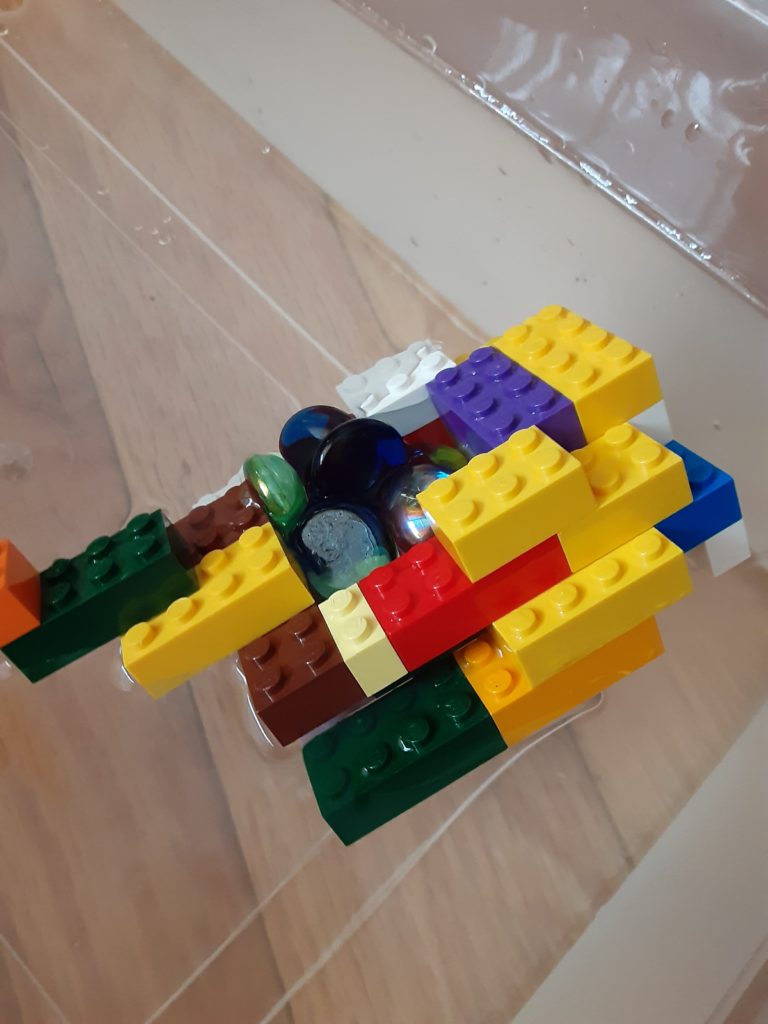
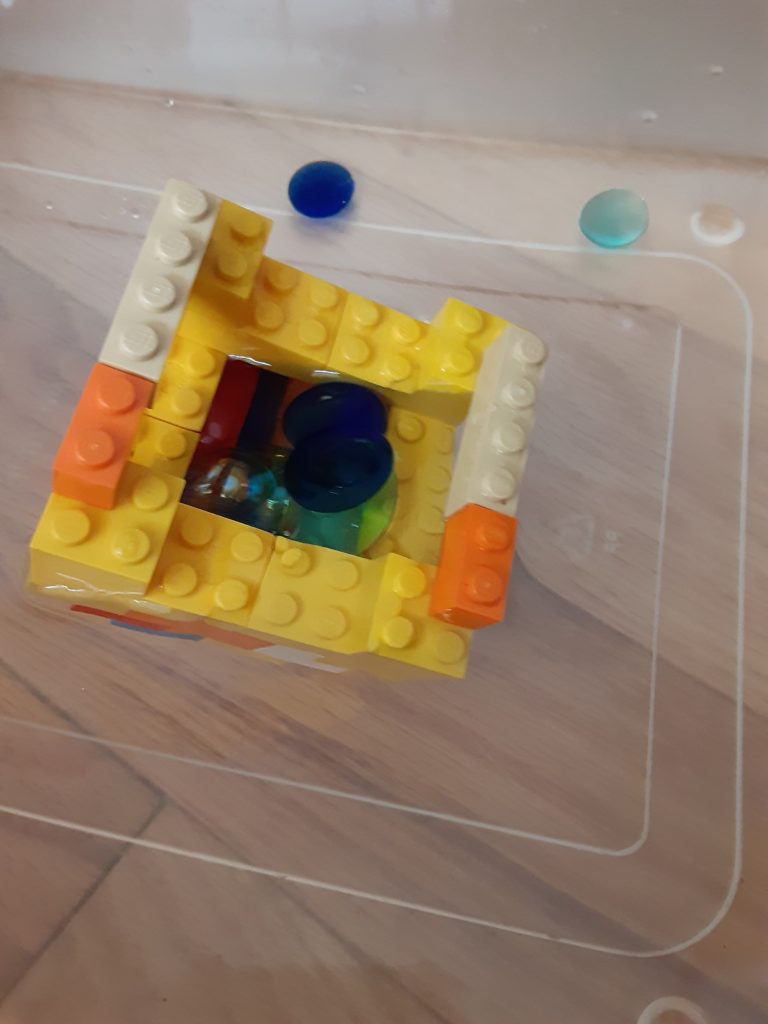
At first, my boat held the most. It had 10 glass beads. My son’s boat held 8. However, my son realized he needed to place his beads more carefully. When he did this, his boat held 12 beads. He ended up winning.
As I mentioned earlier, our boats had a slight lean. Well, this definitely played a part in our boats’ ability to hold weight. They started tipping more quickly than if they weren’t already leaning slightly. It was something to keep in mind when trying it again.
Lego Boat Wrap-Up
Lego boats are a fun activity that the kids (or the whole family) will enjoy. STEM challenges are always exciting, not to mention educational. Kids learn to experiment and try new designs. Great problem-solving skills, by the way.
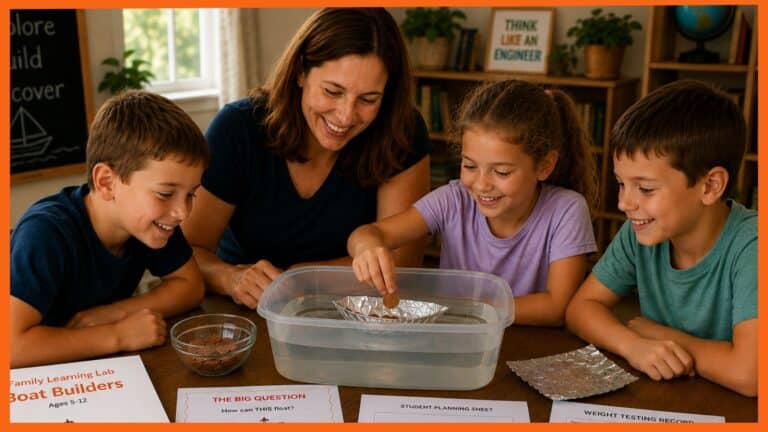
If your kids had a blast with our LEGO boat activity, get ready because we’re about to set sail on an even bigger learning adventure!

The full STEM Boat Challenge Pack takes all that hands-on fun and builds on it with the key science principles behind boat design, plus FOUR fresh, super-engaging boat-building challenges your kids will love.
And don’t worry, we’ve already done all the prep for you. Inside the instant download, you’ll find ready-to-print STEM challenge cards, a colorful STEM poster, and easy-to-follow worksheets that walk your kids through the challenges and help them reflect on them.
You can keep it simple for a quick afternoon activity, or use the complete guide to turn it into a fun mini-unit study. Either way, it’s flexible, low-stress, and packed with value for your homeschool or weekend family time.
Want a few more STEM activities? You may like to try the Zip Line Challenge, STEM Tower Challenge, or the very popular Lego Balloon Cars.
Let the fun begin!
Happy Homeschooling!

[…] Quote from the source: … […]
[…] Quote from the source: … […]