

This post contains affiliate links. By clicking on the link and making a purchase, I may receive a small compensation at no extra cost to you. I only promote products that we love and use in our homeschool. Please click here for full details on my Disclosure Policy.
If you’re searching for a high school literature program that teaches more than plot summaries and book reports,Windows to the World: An Introduction to Literary Analysis from IEW might be precisely what your homeschool needs.
This curriculum digs deeper. It teaches students how to annotate, analyze, question, and truly understand what they’re reading, not just check a box and finish an assignment. It was just what I was looking for to use with my son (he’s a high school junior).
Now, let’s dive into this literary analysis curriculum so you can see if this is the right fit for your teen.
{I am an Ambassador for the Institute for Excellence in Writing (IEW) because we love using IEW in our homeschool. I received this complimentary curriculum to write an honest review to help other homeschool families.}
What Is Windows to the World?
Windows to the World is designed as a one-semester high school literary analysis course, but IEW includes plenty of support materials so you can easily stretch it into a full-year Literature and Composition class. These additional resources are available within the parent dashboard.
This curriculum teaches students to:
- Annotate texts
- Identify literary devices
- Understand symbolism and theme
- Analyze worldview in writing
- Write clear, thoughtful essays
And instead of overwhelming students with hefty classic novels right away, the course starts with short stories included directly in the student book.
What’s Included in Windows to the World?
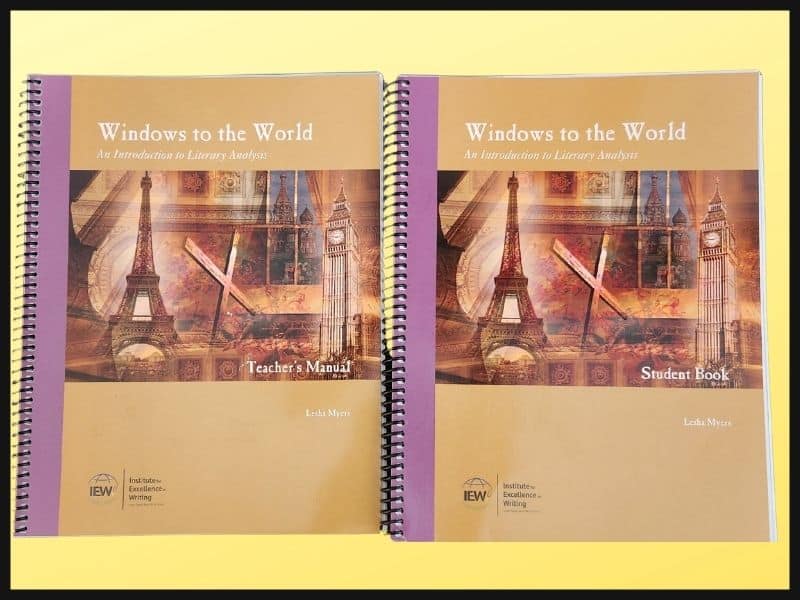
Student Book
Your teen gets clear, structured instruction in:
- How to annotate
- Literary devices and examples
- Short stories for analysis
- Guided practice activities
- Theme, symbolism, and worldview
- Deep literary analysis
The student book gives plenty of opportunities to practice reading closely and thinking critically.
Here is a sample of Student Book pages.
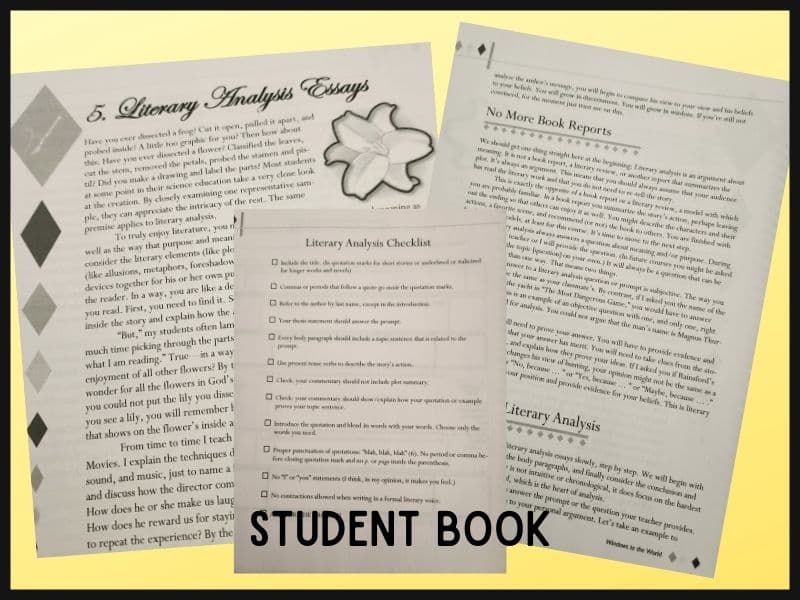
This was a challenge for him because he’s never been asked to do this. However, we spent additional time practicing it and talking through it together.
Teacher’s Manual
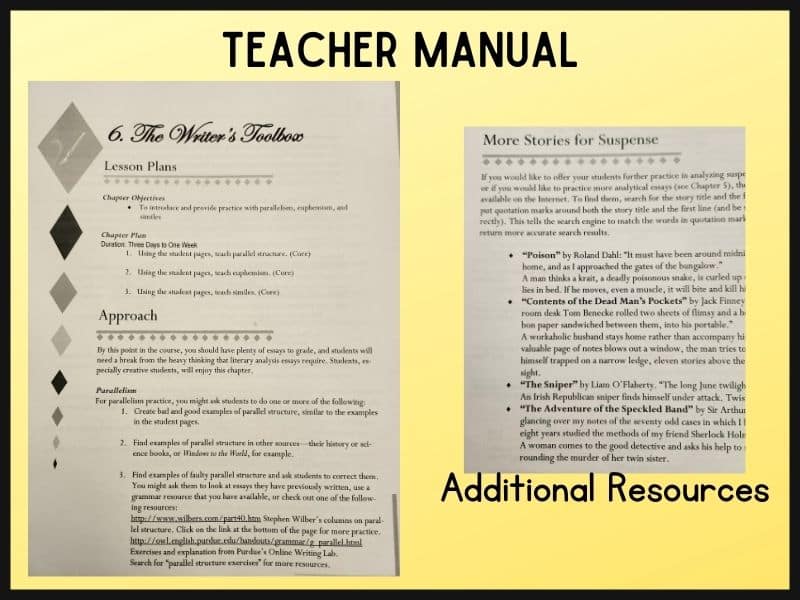
The Teacher’s Manual is your roadmap. Inside you’ll find:
- Lesson plans- chapter objectives and plan
- Advice on how to prepare for the chapter
- Teaching strategies
- Discussion prompts
- Activity ideas
- Answers to all student questions and possible discussion answers
- Resource list- other materials that are helpful
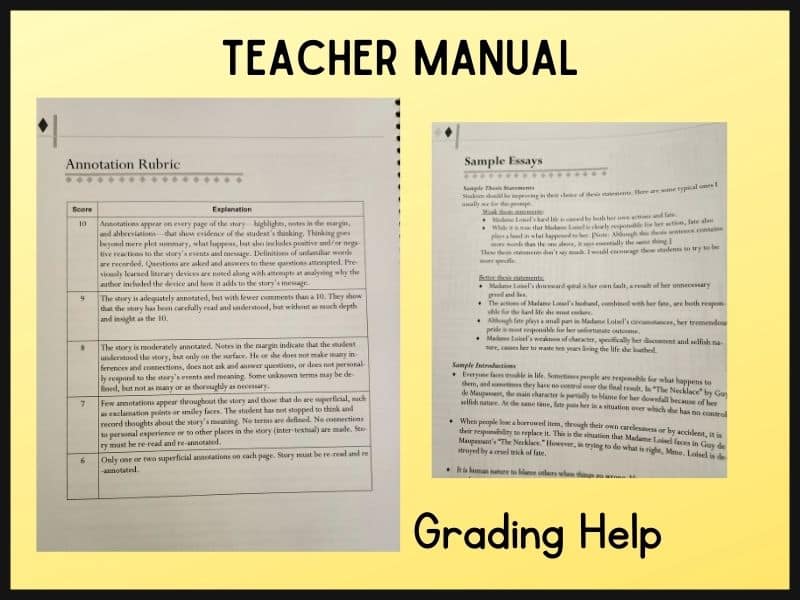
One note: this manual does not include student pages. It’s different from some IEW materials, so expect a slight learning curve if you are expecting it to be like their Fix It! Grammar or Structure and Style of Writing.
Here are some sample Teacher Manual Pages.
Digital Dashboard Resources
IEW includes several digital extras:
- Student homework pages
- A teacher’s ebook with literature suggestions
- Schedules for expanding to a full-year course
- Additional support for students new to classic literature
These are particularly helpful if you want flexibility.
Topics Covered in This Literary Analysis Curriculum
Windows to the World teaches:
- Annotation
- Allusions
- Plot & Suspense
- Literary Analysis Essays
- Parallelism, Euphemism, Similes
- Characterization
- Symbolism & Emphasis
- Theme & Worldview
- Setting
- Imagery
- Point of View
- Tone
- Irony
Students begin by analyzing “The Most Dangerous Game,” which is a great choice for building foundational reading skills. They later move into fables, poetry, speeches, and more.
They’ll also read works by Edgar Allan Poe, Robert Browning, Victor Hugo, and biblical texts. It’s a strong mix of classic authors and important literary materials.
How Windows to the World Works in a Homeschool Setting
Let’s get this out of the way upfront:
This is NOT an open-and-go curriculum.
Reading ahead is important. You’ll want to familiarize yourself with both the student materials and the teacher guide. The student book is super helpful when planning. My son and I used the student book and completed the lessons together.
The first few lessons were absolutely a learning curve for me because I tried to jump in too quickly. I can be a little impulsive, like that. It wasn’t a good idea.
Once I slowed down, stayed a lesson or two ahead, and understood how the pieces fit together, everything clicked. Suddenly:
- The discussions flowed naturally
- The skills made sense
- The lessons were overall more effective
If you enjoy conversation-based teaching, you’ll love this course.
If you’re part of a co-op, it works even better. The teacher manual includes so many discussion tools, group activities, and project ideas that it is perfect for group learning.
What Makes This Literary Analysis Program Stand Out?
1. Annotation Is Taught Extremely Well
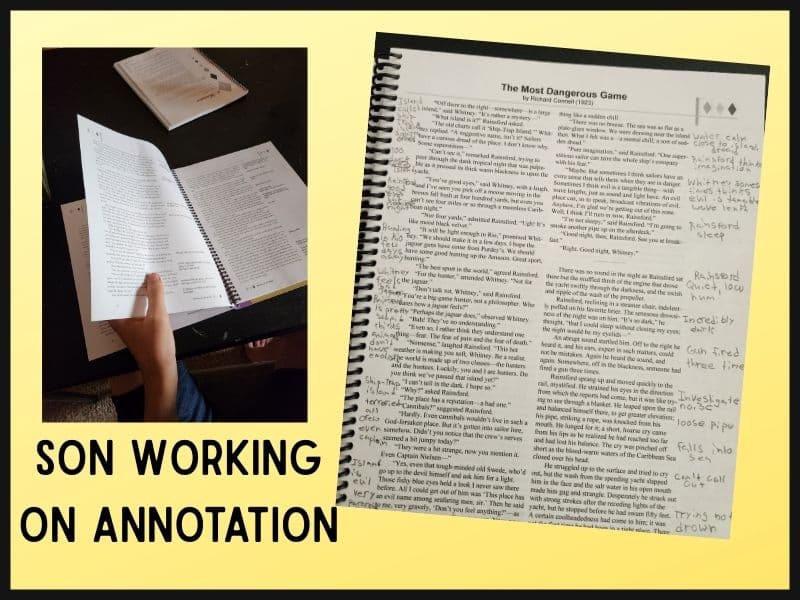
This is one of the strongest parts of the curriculum. Students learn what to mark, why to mark it, and how annotation helps them think as readers.
2. Deep, Meaningful Literary Analysis
Students aren’t just checking off “find a metaphor.” They’re learning to ask why an author made a choice, what it means, and how it connects to the whole text.
3. Christian Worldview Integration into Literary Analysis
A Christian worldview is woven throughout, beginning with Biblical Allusions. This allows teens to consider other worldviews and how their own may be similar or different.
If your family isn’t Christian, the course is still valuable. The analysis skills are universal, and the content can be adapted. You can use the other examples provided and the author’s suggested resources (often online).
4. Strong Prep for College-Level Work
If your teen is looking for a higher-level English program, dual enrollment, or future college literature classes, this curriculum builds a solid foundation in literary analysis.
Pros of Windows to the World
- Excellent annotation instruction
- In-depth literary analysis
- Strong selection of short stories
- Supportive Teacher’s Manual
- Ideal for co-ops or small groups
- Encourages meaningful conversations
- Can expand to a full-year credit
- Builds strong critical thinking
Cons to Consider
- Not open-and-go
- Requires teacher involvement
- Some classic literature familiarity helps
- Contains a Christian worldview
Who Is This Curriculum Best For?
Choose Windows to the World if your teen:
- Enjoys deep discussions
- Has solid writing skills
- Reads thoughtfully
- Can handle inference
- Has some experience with classic texts
It might not be the best fit if your teen:
- Prefers independent, self-paced learning
- Needs a very low-prep curriculum
Final Thoughts: Is Windows to the World Worth It?
In my experience, absolutely.
Windows to the World is a rich, thoughtful, beautifully structured literary analysis curriculum that teaches students how to read deeply and think critically. Yes, it requires prep work. Yes, you’ll be involved. But the results are worth it.
If you want a literature program that:
- Builds analytical thinking
- Prepares students for college-level reading
- Encourages meaningful conversation
…this curriculum fits the bill.
And with the extended reading lists and flexible schedules, it’s easy to turn this into a full-year high school literature and composition credit that works for a wide variety of learners.
Happy Homeschooling!


Thank you! This may be just what I was hoping to find for my 16yo.
Oh, good to hear! I hope this is a good fit.